
In the main hall, there is a painting of Ksitigarbha, the Bodhisattva who helps the suffering of the nether world. On each side of Ksitigarbha stand five imposing figures. These are the Ten Judges. Other popular Buddhist paintings in the main hall is the paintings featuring Bodhisattva of the Protection of Buddhist Doctrine(Shinjung Taenghwa). It is most often found on the right wall of the Main Hall.

1. King Jingwang (Qinguang) 진광대왕

2. King Chogang (Chujiang) 초강대왕
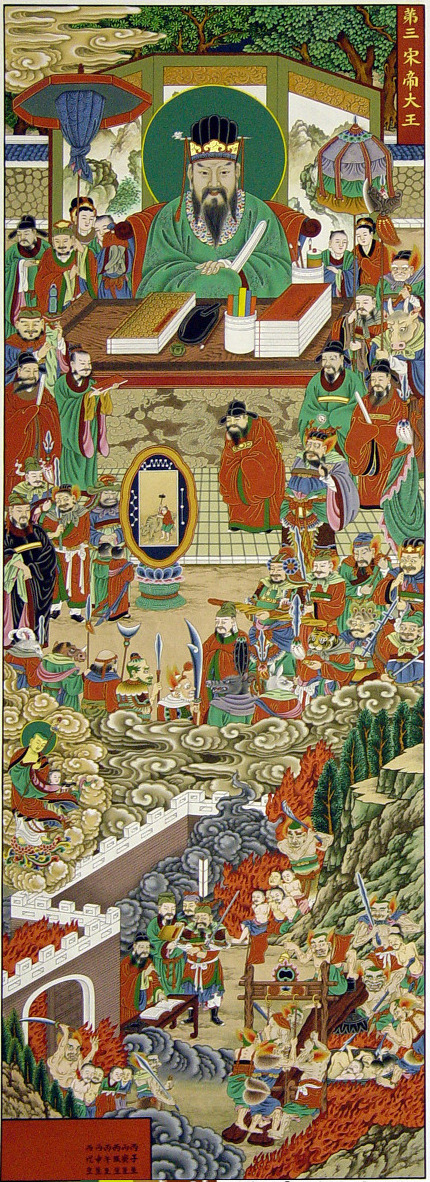
3. King Songje (Songdi) 송제대왕
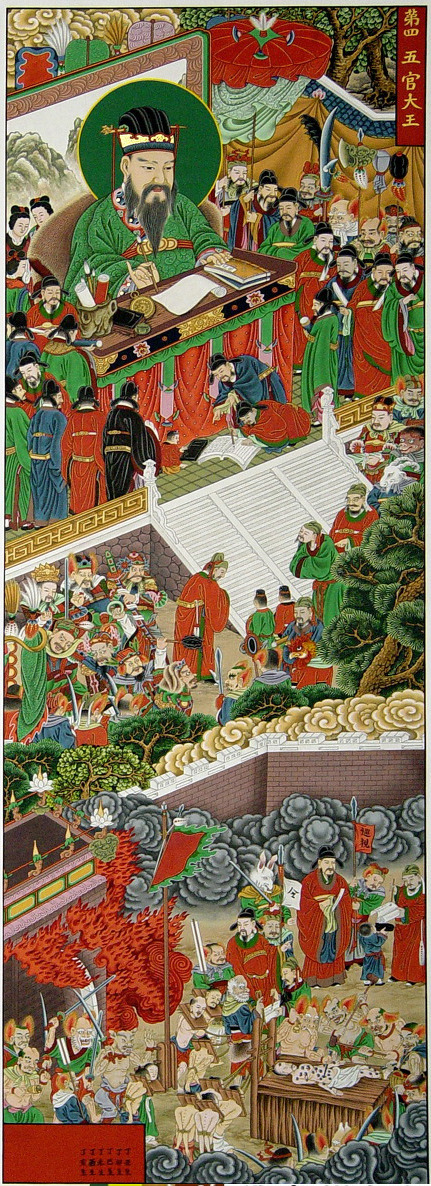
4. King Ogwan (Wuguan) 오관대왕
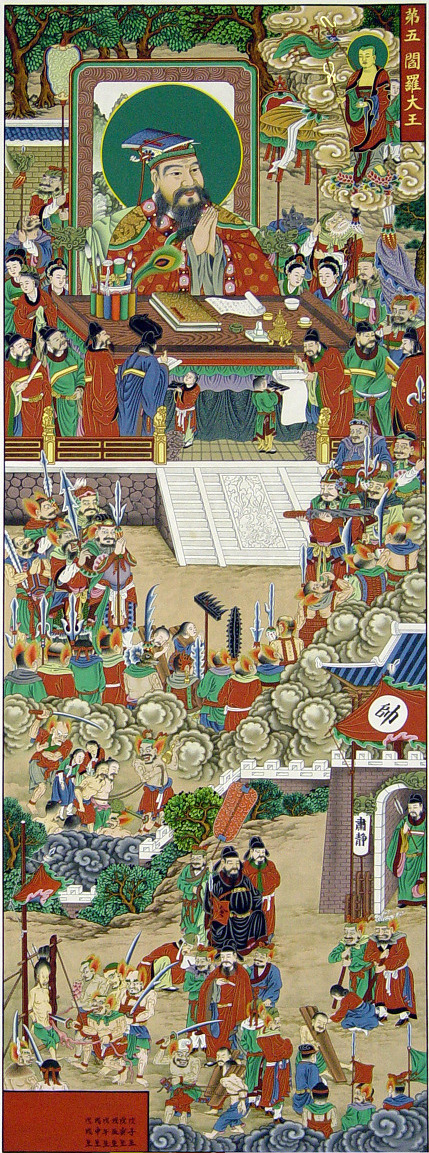
5. King Yeomra (Yama) 염라대왕
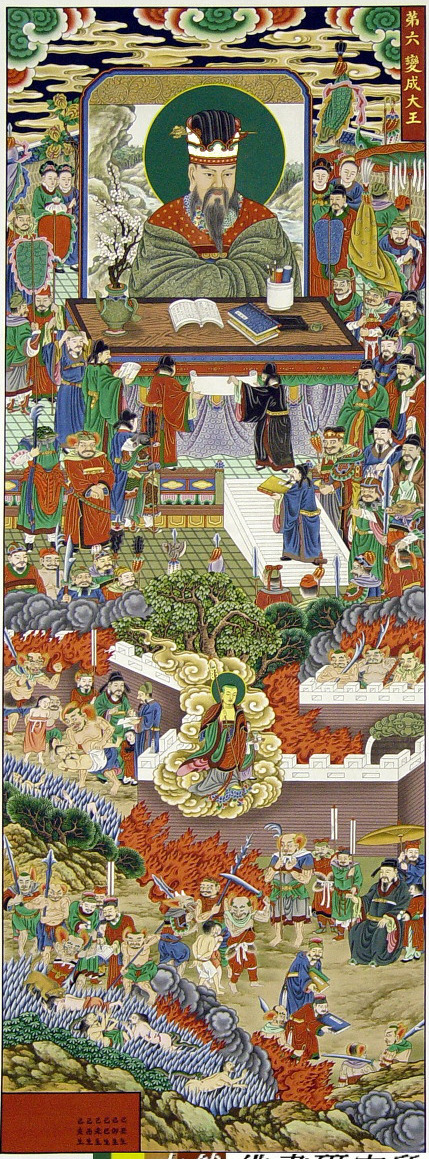
6. King Byeonseong (Biancheng) 변성대왕
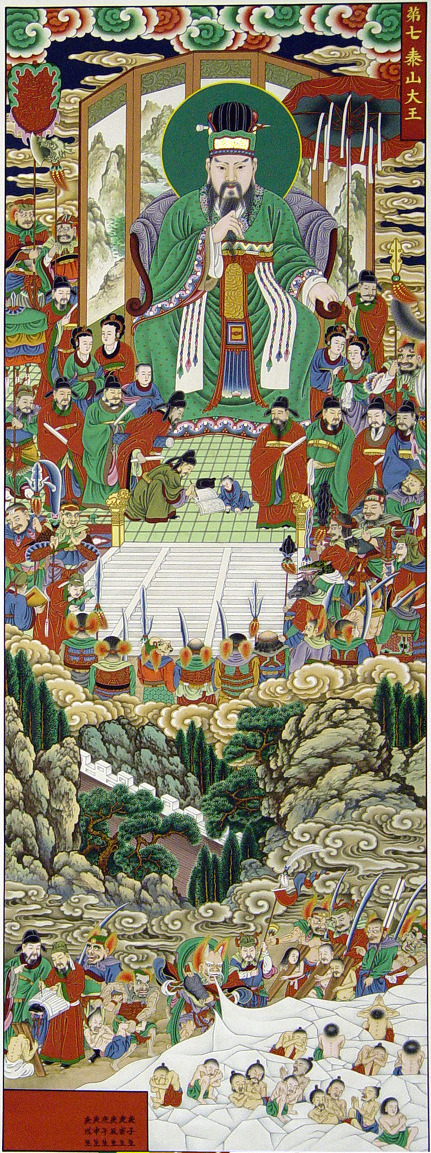
7. King Taesan (Taishan) 태산대왕
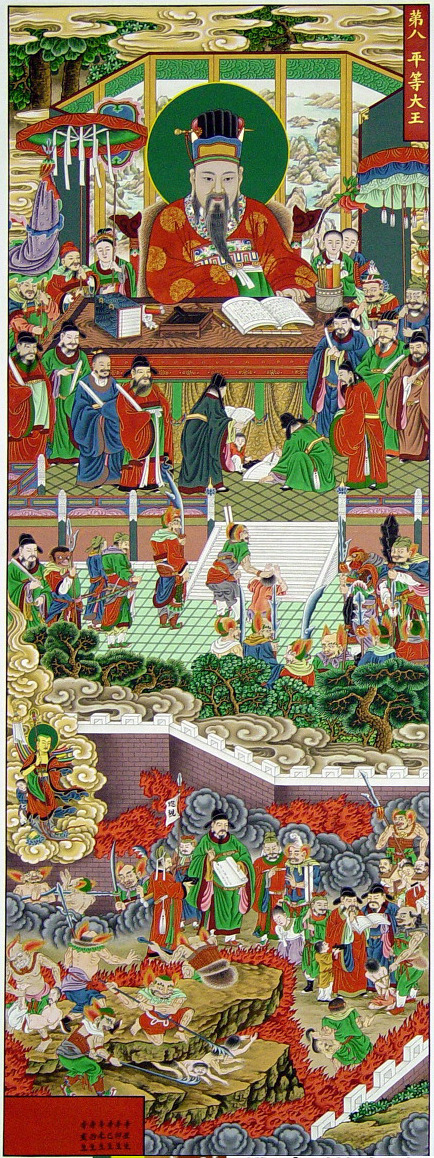
8. King Pyeongdeung (Pingdeng) 평등대왕
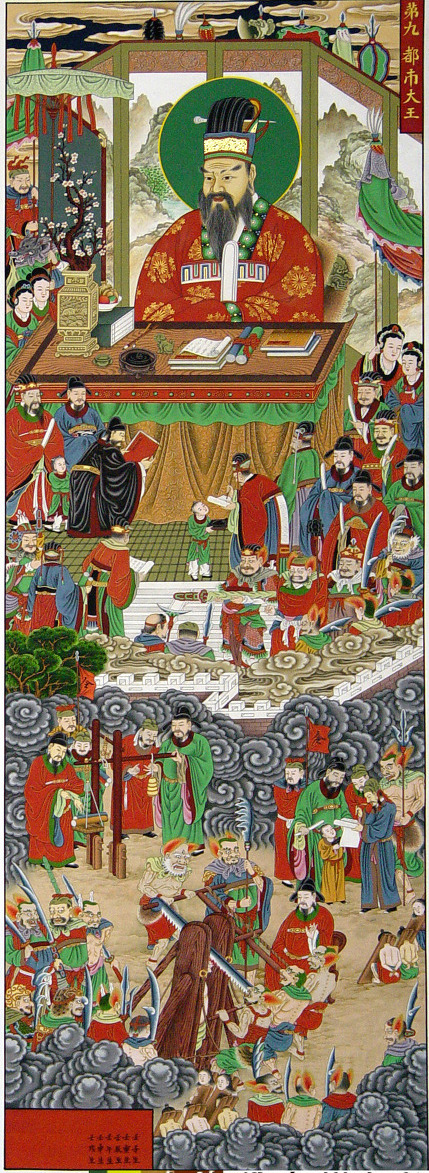
9. King Dosi (Dushi) 도시대왕

10. King Jeollyun (Zhuanlun) 전륜대왕
Siwang (Ten Judges)
These paintings are enshrined in the Hall of the Underworld (Myeongbujeon), the Hall of Ksitigarbha (Jijangjeon), or the Hall of the Ten Kings (Siwangjeon).
Examining extant Korean paintings of the Ten Judges, the prevailing style during the Goryeo Dynasty was the Jijang-Siwangdo (Painting of Ksitigarbha and the Ten Kings). In this format, Ksitigarbha Bodhisattva is the central deity, while the Ten Judges, Indra, Brahma, and the Four Heavenly Kings are depicted in the lower section. Works preserving this style are currently held in collections such as the Seikado Bunko (Tokyo) and Nikko-ji Temple (Okayama) in Japan, and are estimated to date mostly from the late 14th century.
During the Joseon Dynasty, while there were compositional changes—such as the figures surrounding the central Ksitigarbha—the iconographic characteristics of the Goryeo era persisted, and the production of Jijang-Siwangdo flourished. Most early Joseon works are currently preserved in Japan, including collections at Iyadani-ji Temple (Kagawa, 1546), Komyo-ji Temple (Hiroshima, 1562), and Tanjo-ji Temple (Okayama, 1582). Dozens of works from the early Joseon period alone are known to exist.
A distinct development in the Joseon era, not seen in the Goryeo period, was the production of independent Siwangdo. These were often created as a set of ten separate paintings, with each scroll depicting one of the Ten Judges. In these paintings, the Judge is typically seated in the upper center, flanked by messengers, officials, celestial beings, and boy attendants. The lower section usually contains vivid depictions of the various punishments and suffering in hell.
Because the faith in the Ten Judges combined with indigenous folk beliefs, it became mandatory to enshrine Siwangdo in one of the temple halls, such as the Myeongbujeon, Jijangjeon, or Siwangjeon. While most surviving examples date from the late Joseon period or later, a significant number have been preserved. Notable examples include the Siwangdo at Okcheon-sa Temple in Goseong (1744) and the Siwangdo at Tongdosa Temple (1775).