Page 1: The Journey to True Self
Introduction & Concept of Temple Stay
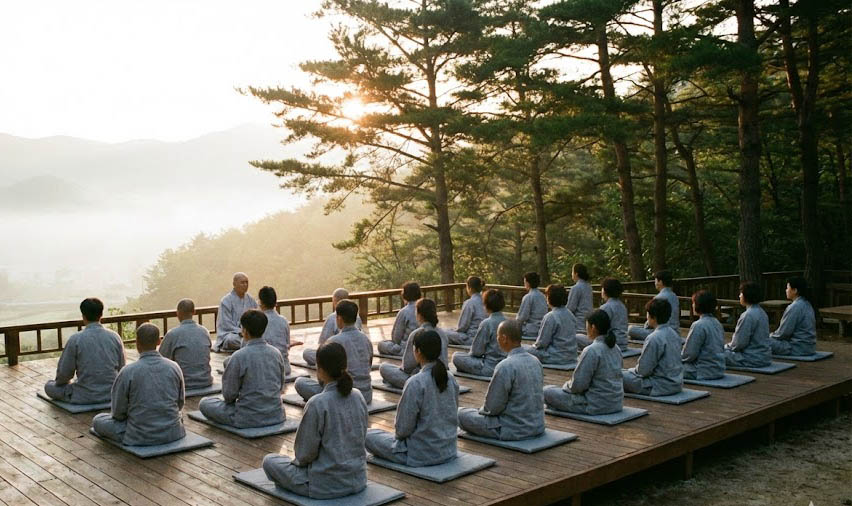
What is Temple Stay?
Temple Stay is a unique cultural program that allows visitors to experience the life of Buddhist practitioners at traditional temples that preserve the 1,700-year-old history of Korean Buddhism. It is open to everyone, regardless of religion or nationality.
For a brief moment, you leave behind the noise and competition of the secular world. Surrounded by nature and silence, you seek the "true happiness" that exists within you. It is not merely a tour or a lodging experience; it is a time of healing and self-reflection.
The Core Values
- Rest: A break from the relentless pace of modern society.
- Emptying: Letting go of greed, anger, and delusion.
- Filling: Filling the mind with wisdom, compassion, and peace.
- Harmony: Learning to live in harmony with nature and neighbors.
Why Temple Stay?
Korean Buddhist temples are often located deep in the mountains, offering breathtaking scenery and fresh air. By staying here, you harmonize your rhythm with nature. You wake up before dawn, listen to the sounds of the wind and birds, and reclaim the peace of mind that you have lost.
Page 2: Finding Your Path
Types of Programs & Spiritual Practice (Part 1)
Types of Temple Stay
Temples offer various programs tailored to the needs of visitors:
- Experiential Program: A schedule packed with traditional Buddhist activities (Meditation, 108 Bows, Tea Ceremony, etc.). Recommended for first-time visitors or those wanting a deep cultural immersion.
- Rest-oriented Program (Freestyle): Aside from meal times and ceremonial services, your time is your own. You can hike, read, or meditate freely. Perfect for those seeking pure relaxation and healing.
- One-Day Program: A short experience lasting 2–4 hours for those who cannot stay overnight but wish to experience the essence of temple culture.
05. Yebul: Ceremonial Service
The Sound that Wakes the World
Yebul is the ceremony where practitioners pay respect to the Buddha and the Dharma (teachings). It is held three times a day: dawn (usually 3:00 or 4:00 AM), mid-morning, and evening.
- The Atmosphere: In the quiet of dawn, the grand sound of the Dharma Drum (Beopgo) and the resonant Bell resonate through the mountains.
- The Meaning: It is not idol worship, but a pledge to follow the path of wisdom and to awaken the "Buddha nature" within oneself. Chanting together creates a powerful vibration that clears the mind.
02. Chamseon: Seon (Zen) Meditation
Looking Inward
Chamseon is a method of meditation to cut off all wandering thoughts and see one’s original nature.
- Posture: Typically practiced in the half-lotus or full-lotus position.
- Method: You may focus on your breath (Susik-gwan) or hold a Hwadu (a question that cannot be answered by logic, such as "What is this?").
- The Goal: To move beyond the dualities of good and bad, self and other, and to reach a state of absolute stillness and clarity.
Page 3: Mindfulness in Motion
Spiritual Practice (Part 2)
04. Barugongyang: Monastic Meal
Eating as a Practice
Barugongyang is the traditional way Buddhist monks eat. It is an eco-friendly and communal meal ritual using four wooden bowls called Baru.
- Equality: Everyone eats the same food, sitting in the same posture.
- Silence: The meal is conducted in silence to focus on the act of eating and the effort behind the food.
- Zero Waste: A key philosophy is "waste nothing." You use a piece of kimchi and water to clean your bowl at the end, drinking the water to ensure not a single grain of rice is wasted.
- Gratitude: It teaches us to be thankful for the universe and the labor that brought the food to us.
06. 108 Baewe: 108 Prostrations
Lowering the Body to Elevate the Mind
The practice of bowing 108 times represents the cleansing of the 108 kinds of delusions and anxieties (defilements) that humans possess.
- Physical Aspect: It is a full-body exercise that strengthens the legs and core while correcting posture.
- Spiritual Aspect: With each bow, you lower your head to the ground, humbling yourself and letting go of your ego. It is a powerful method for repenting past wrongdoings and strengthening one's vows.
- Method: Stand straight, place palms together, kneel, touch the forehead to the floor, turn palms upward (symbolizing lifting the Buddha's feet), and stand up again.
Page 4: Connection & Culture
Interactive Experiences
03. Tea Time with a Monk (Chadamsi)
Wisdom in a Cup of Tea
This is often cited as the most memorable part of Temple Stay. You sit with a monk, drinking traditional tea (often green tea or lotus leaf tea).
- Dialogue: You are free to ask questions about Buddhism, life, worries, or happiness.
- Wisdom: The monk offers advice not just from books, but from years of practice and insight.
- Serenity: The act of brewing and drinking tea helps to calm the excitement of the mind and fosters a deep connection.
07. Making Lotus Lanterns & Prayer Beads
Crafting Mindfulness
These artistic activities are forms of moving meditation.
- Lotus Lanterns: The lotus flower blooms cleanly even in muddy water, symbolizing the Buddha's wisdom appearing in the chaotic world. Making a lantern represents lighting up your own darkness and wishing for the happiness of others.
- Making 108 Prayer Beads (Yeomju): You thread 108 beads onto a string, often bowing once for each bead threaded. The finished rosary serves as a reminder of your time at the temple and a tool for future practice.
Page 5: Begin Your Journey
01. Guide to Temple Stay Locations
Korea has over 130 temples operating Temple Stay programs. Below is a curated list of renowned temples welcoming international visitors.
Note: For real-time booking and specific schedule availability, please visit the official Temple Stay portal.
1. Seoul & Metropolitan Area (Urban Accessibility)
| Temple Name | Location | Key Features | Contact / Website |
| Jogyesa | Seoul (Jongno) | The center of Korean Buddhism; located in the heart of the city. | +82-2-768-8660 www.jogyesa.kr |
| Bongeunsa | Seoul (Gangnam) | A 1,200-year-old temple amidst modern skyscrapers. | +82-2-3218-4826 www.bongeunsa.org |
| Jingwansa | Seoul (Eunpyeong) | Famous for its temple food and scenic Bukhansan mountain views. | +82-2-389-6005 www.jinkwansa.org |
| Jeondeungsa | Incheon | The oldest temple in Korea; rich in history and fortress walls. | +82-32-937-0125 www.jeondeungsa.org |
2. Mountain & Heritage Temples (Deep Nature)
| Temple Name | Location | Key Features | Contact / Website |
| Woljeongsa | Pyeongchang | Famous for its beautiful Fir Tree Forest path and Odesan mountain. | +82-33-339-6606 www.woljeongsa.org |
| Beopjusa | Boeun | Home to the tallest Golden Maitreya Buddha statue; UNESCO site. | +82-43-544-5656 www.beopjusa.org |
| Haeinsa | Hapcheon | Home to the Tripitaka Koreana (UNESCO); focuses on serious practice. | +82-55-934-3105 www.haeinsa.or.kr |
| Bulguksa | Gyeongju | The jewel of Silla culture and a UNESCO World Heritage site. | +82-54-746-9913 www.bulguksa.or.kr |
| Tongdosa | Yangsan | One of the Three Jewel Temples; known for having no Buddha statue (relics used). | +82-55-382-7182 www.tongdosa.or.kr |
3. Temple Stay Information Center
For general inquiries, reservations, and information on other temples:
- Address: 56, Ujeongguk-ro, Jongno-gu, Seoul, Korea
- Official Website: www.templestay.com
- Email: support@templestay.com