Korean Buddhism: A History of Harmony, Resilience, and Awakening
Introduction: The Spiritual Bedrock of Korea For over 1,700 years, Buddhism has been the spiritual bedrock of the Korean people. Since its introduction in the 4th century, it has transcended the role of a mere religion to become the foundation of Korean philosophy, ethics, art, and culture. While Korea adopted Mahayana Buddhism from China and India, it did not simply replicate these traditions. Instead, it evolved into a unique form known as "Tong-bulgyo" (Interpenetrating or Holistic Buddhism), which seeks to harmonize doctrinal differences into a unified path of awakening. Today, Korean Buddhism stands as a vibrant tradition, preserving the ancient practice of Seon (Zen) meditation while actively engaging with modern society.
1. The Historical Tapestry
The Period of Transmission and Establishment (The Three Kingdoms, 372–668 AD) Buddhism was officially introduced to the Korean peninsula in 372 AD during the Goguryeo Kingdom, when monks and scriptures arrived from the Former Qin state of China. It soon spread to the Baekje Kingdom, which played a crucial role in transmitting Buddhism and advanced culture to Japan. In the Silla Kingdom, Buddhism was initially met with resistance by the aristocracy but was eventually accepted following the martyrdom of Ichadon, whose death is legendary for the white blood that miraculously flowed from his neck. By the 6th century, Buddhism had become the state religion of all three kingdoms, providing a spiritual ideology that united the nation.
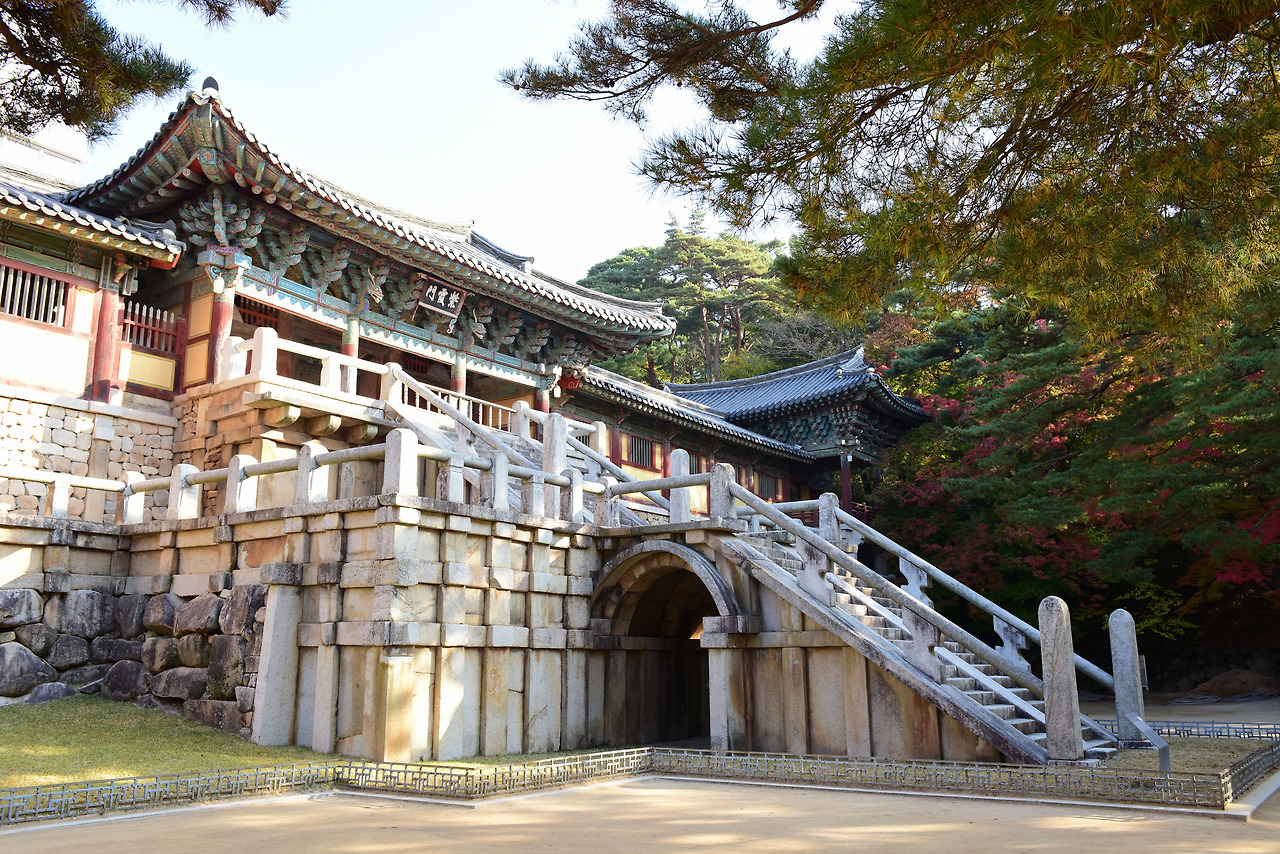
The Golden Age (Unified Silla, 668–935 AD) The unification of the peninsula by Silla ushered in the "Golden Age" of Korean Buddhism. During this era, Buddhism flourished not only as a religion but as a sophisticated culture of art and philosophy.

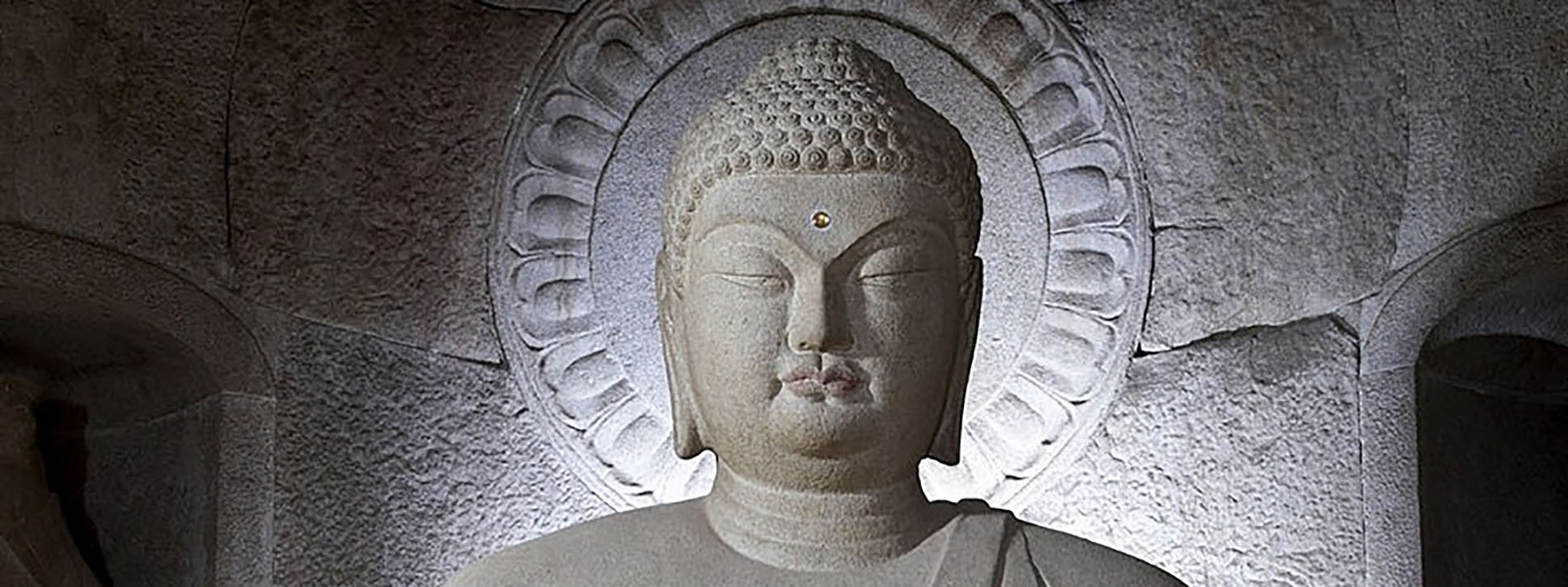
Cultural Masterpieces: This period saw the construction of Bulguksa Temple and Seokguram Grotto (both UNESCO World Heritage Sites), which display a perfect harmony of mathematical geometry and Buddhist aesthetics.
- Philosophical Depth: Great masters like Wonhyo and Uisang established the theoretical foundations of Korean Buddhism. Wonhyo, in particular, preached to the common people, breaking down the barriers between the elite and the masses.
The State Religion and National Defense (Goryeo Dynasty, 918–1392) In the Goryeo Dynasty, Buddhism reached its peak influence as the state religion. Kings and commoners alike were devout followers, and Buddhist rituals were integral to national affairs.
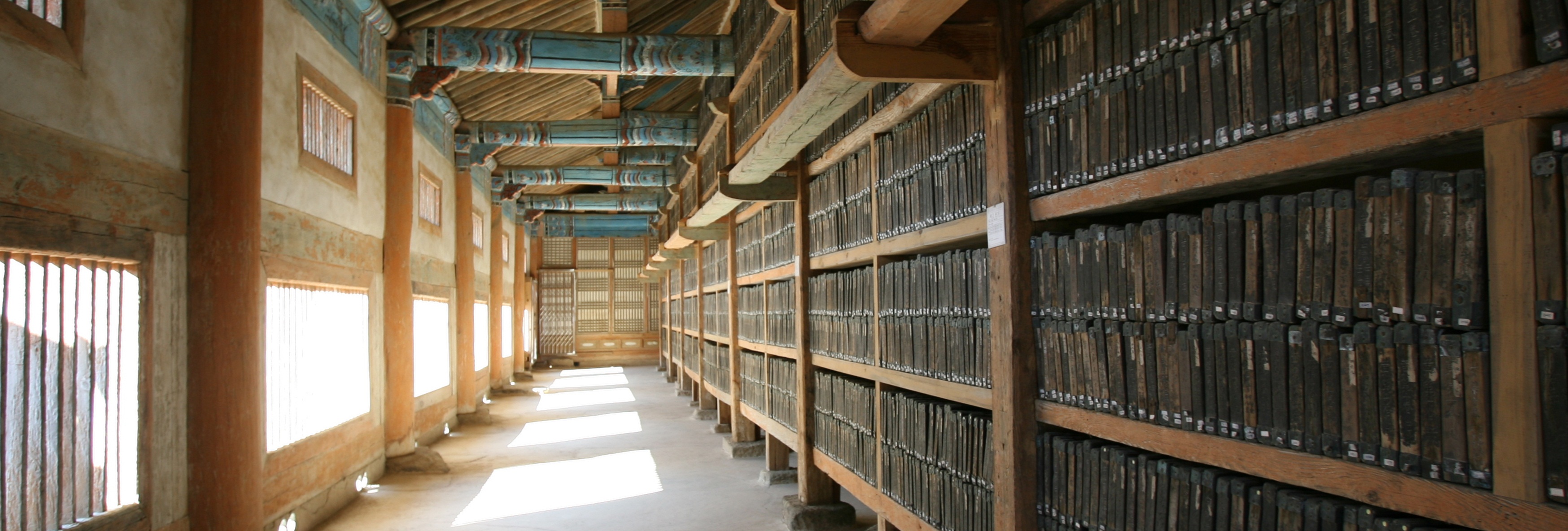
- The Tripitaka Koreana: The most significant achievement of this era is the Tripitaka Koreana. Carved onto more than 80,000 wooden blocks, this complete collection of the Buddhist canon was created as a desperate prayer to the Buddha to protect the nation from Mongol invasions. It remains the world’s oldest and most comprehensive intact version of the Buddhist canon.
Persecution and the "Mountain Temple" Era (Joseon Dynasty, 1392–1910) With the rise of the Confucian-based Joseon Dynasty, Buddhism faced five centuries of severe suppression. Monks were lowered to the lowest social class, and temples were banned from major cities.
- Preservation in Nature: This persecution forced Buddhism to retreat deep into the mountains. Paradoxically, this isolation allowed Korean Buddhism to develop a pristine monastic culture in harmony with nature, preserving the meditative tradition away from worldly corruption.
- Hoguk Bulgyo (Protection of the Nation): Despite their mistreatment, Buddhist monks rose to defend the country during national crises. During the Japanese invasions of the late 16th century, Great Monk Seosan and Monk Samyeong led "Righteous Armies" of warrior monks to save the nation, cementing the tradition of patriotic Buddhism.
2. Distinctive Characteristics of Korean Buddhism
Korean Buddhism is distinct from other East Asian traditions due to three core characteristics:
A. Tong-bulgyo (Holistic/Ecumenical Buddhism) Unlike other regions where Buddhism often splintered into various rival sects (such as Pure Land vs. Zen vs. Scholastic schools), Korean Buddhism has historically strived for unity. The Great Master Wonhyo introduced the philosophy of Hwajaeng (Harmonizing Disputes), teaching that all Buddhist doctrines ultimately flow into the "One Mind." Consequently, a single Korean temple typically encompasses spaces for Seon meditation, doctrinal study, and Pure Land chanting, offering a comprehensive path to enlightenment.
B. Ganhwa Seon (The Path of Questioning) The core practice of Korean Buddhism is Seon (Zen). Specifically, the Ganhwa Seon tradition is dominant. This method involves meditating on a Hwadu—a profound question or topic (e.g., "What is this?") that cannot be solved by logic. The practitioner focuses intensely on this doubt until they break through the dualistic mind and attain sudden enlightenment. It is a dynamic and powerful practice that emphasizes direct experience over theoretical knowledge.
C. Syncretism with Indigenous Beliefs Korean Buddhism demonstrates a remarkable spirit of inclusivity. Rather than rejecting Korea's indigenous Shamanism and Daoism, Buddhism absorbed them.
- The Sansingak: Almost every Korean temple features a Sansingak (Shrine of the Mountain Spirit) located behind the main Buddha hall. Here, the local mountain god is enshrined as a guardian of the Dharma. This unique feature shows how Buddhism rooted itself in the Korean soil, respecting the local spirits and the people's desire for worldly blessings.
3. Cultural Heritage: The Face of Korea
Buddhism has left an indelible mark on Korea’s tangible and intangible heritage. More than 60% of Korea’s government-designated National Treasures are Buddhist in origin.

- Mountain Monasteries (Sansa): Seven traditional mountain temples (such as Tongdosa, Buseoksa, and Beopjusa) were collectively designated as a UNESCO World Heritage site under the name "Sansa, Buddhist Mountain Monasteries in Korea." These spaces are living museums of history.
- Art and Architecture: From the graceful lines of stone pagodas that reach for the sky to the vibrant Dancheong (traditional decorative coloring) on temple eaves, Buddhist art represents the pinnacle of Korean aesthetics.
- Intangible Heritage: The Yeongsanjae (a magnificent ritual reenacting the Buddha’s sermon) and the Lotus Lantern Festival are recognized by UNESCO as Intangible Cultural Heritage of Humanity, showcasing the vibrancy of Buddhist community culture.
4. Korean Buddhism in the Modern World
Today, Korean Buddhism is experiencing a dynamic revival. It has emerged from the mountains to engage with modern society and the global community.
The Jogye Order and Social Engagement The Jogye Order of Korean Buddhism is the largest and most representative order in Korea, upholding the 1,200-year tradition of Seon practice. The order manages thousands of temples and operates universities, hospitals, and social welfare centers, practicing the Bodhisattva spirit of compassion in daily life.
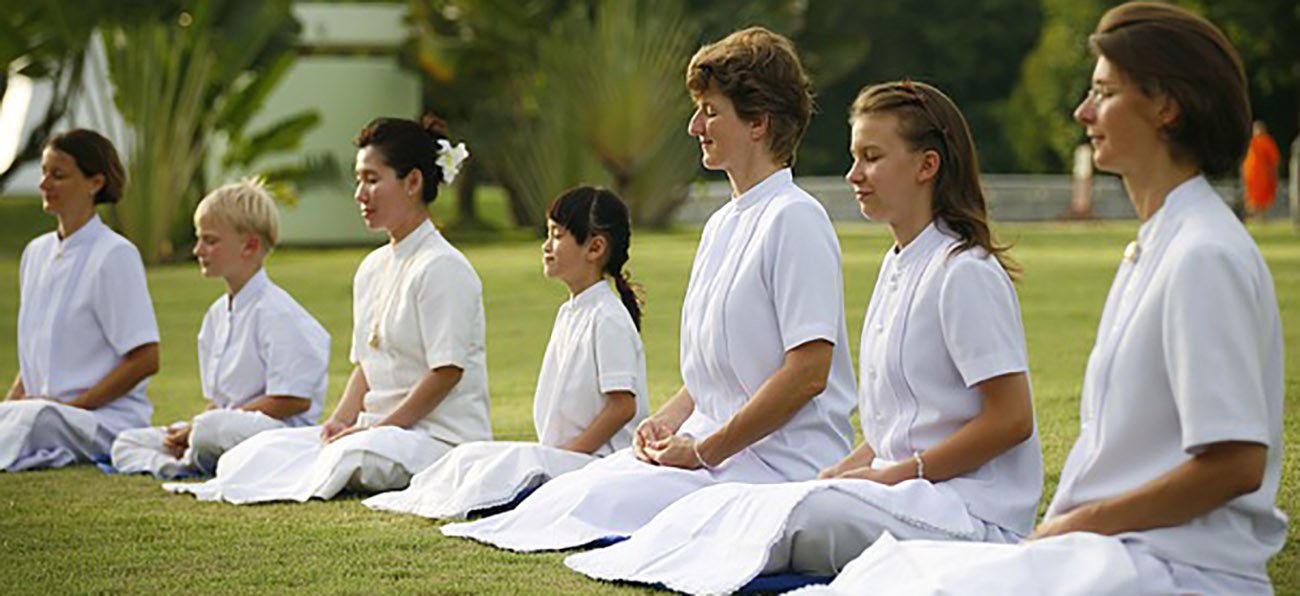
Templestay: Opening the Gates to the World Since 2002, Korean temples have opened their gates to the general public through the Templestay program. This unique cultural program invites visitors—regardless of nationality or religion—to stay overnight at a monastery. Participants experience the daily life of a monk, including:
- Yebul: The ceremonial chanting service.
- 108 Prostrations: A physical practice of humility and reflection.
- Barugongyang: The traditional monastic formal meal.
- Tea Ceremony: Finding peace in a cup of tea.
Conclusion Korean Buddhism is a path of "Seeking the Truth above, and Saving Sentient Beings below." It invites us to look inward to find our true nature and look outward to live in harmony with all beings. As you explore the world of Korean Buddhism, you are exploring the very soul of Korea—a history of resilience, a culture of beauty, and a philosophy of peace.