
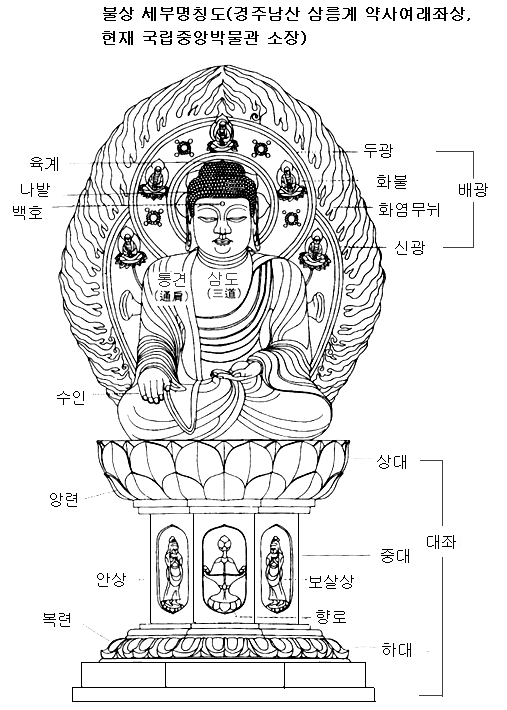
1. Buddha Statue (불상, Bulsang)
korean buddhist sculpture.pdf
General Structure
- 신체부 (Body): Body
- 대좌부 (Pedestal): Pedestal / Throne
- 광배부 (Halo/Mandorla): Aureole / Mandorla
Head & Face (머리 및 얼굴)
- 육계 (Usnisa): Usnisa (Cranial Protuberance)
- 나발 (Spiral Hair): Snail-shell Curls / Spiral Hair
- 백호 (Urna): Urna (Forehead Dot/Jewel)
- 삼도 (Three Neck Creases): Three Neck Creases
Body & Robes (신체 및 의복)
- 법의/가사 (Robes): Robes / Kasaya
- 통견 (Both Shoulders Covered): Robes covering both shoulders
- 편단우견 (Right Shoulder Exposed): Robes exposing the right shoulder
- 수인 (Mudra): Mudra (Hand Gesture)
- e.g., Touching the Earth Mudra (Bhumisparsha)
Halo (광배, Gwangbae)
- 두광 (Head Halo): Head Halo / Nimbus
- 신광 (Body Halo): Body Halo / Mandorla
Pedestal (대좌, Daejwa)
- 상대석 (Upper Tier): Upper Base
- 중대석/간주석 (Middle Tier): Middle Base / Pillar
- 하대석 (Lower Tier): Lower Base
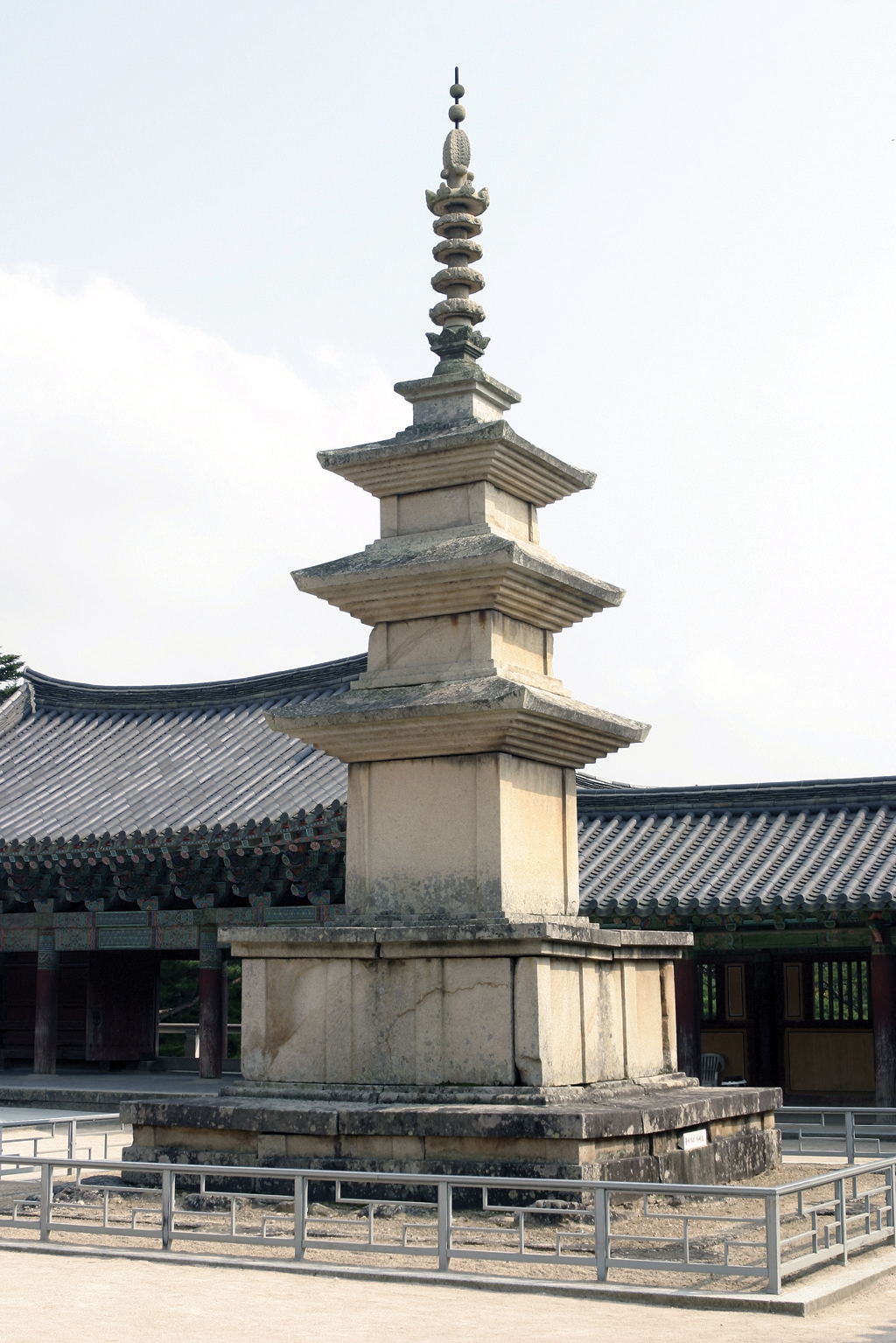
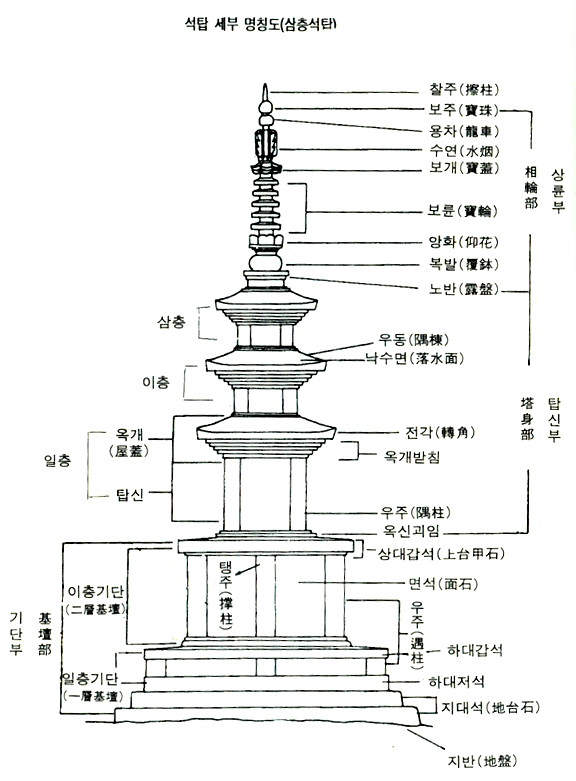
2. Stone Pagoda (석탑, Seoktap)
General Structure
- 상륜부 (Finial): Finial Section (Top)
- 탑신부 (Main Body): Main Body Section
- 기단부 (Base/Platform): Base Section
Finial Section (상륜부, Sangnyunbu) Top to Bottom
- 보주 (Jewel): Precious Jewel (Cintamani)
- 용차 (Dragon Vehicle): Dragon Vehicle
- 수연 (Water Flame): Water Flame
- 보개 (Canopy): Canopy
- 보륜 (Sacred Wheels): Sacred Wheels
- 앙화 (Upturned Lotus): Upturned Lotus
- 복발 (Inverted Bowl): Inverted Bowl
- 노반 (Dew Basin): Dew Basin (Base of Finial)
Body Section (탑신부, Tapsinbu)
- 옥개석 (Roof Stone): Roof Stone
- 탑신석 (Body Stone): Body Stone / Core Stone
Base Section (기단부, Gidanbu)
- 상대석 (Upper Base): Upper Base Stone
- 중대석 (Middle Base): Middle Base Stone
- 하대석 (Lower Base): Lower Base Stone
- 지대석 (Foundation): Foundation Stone / Ground Stone
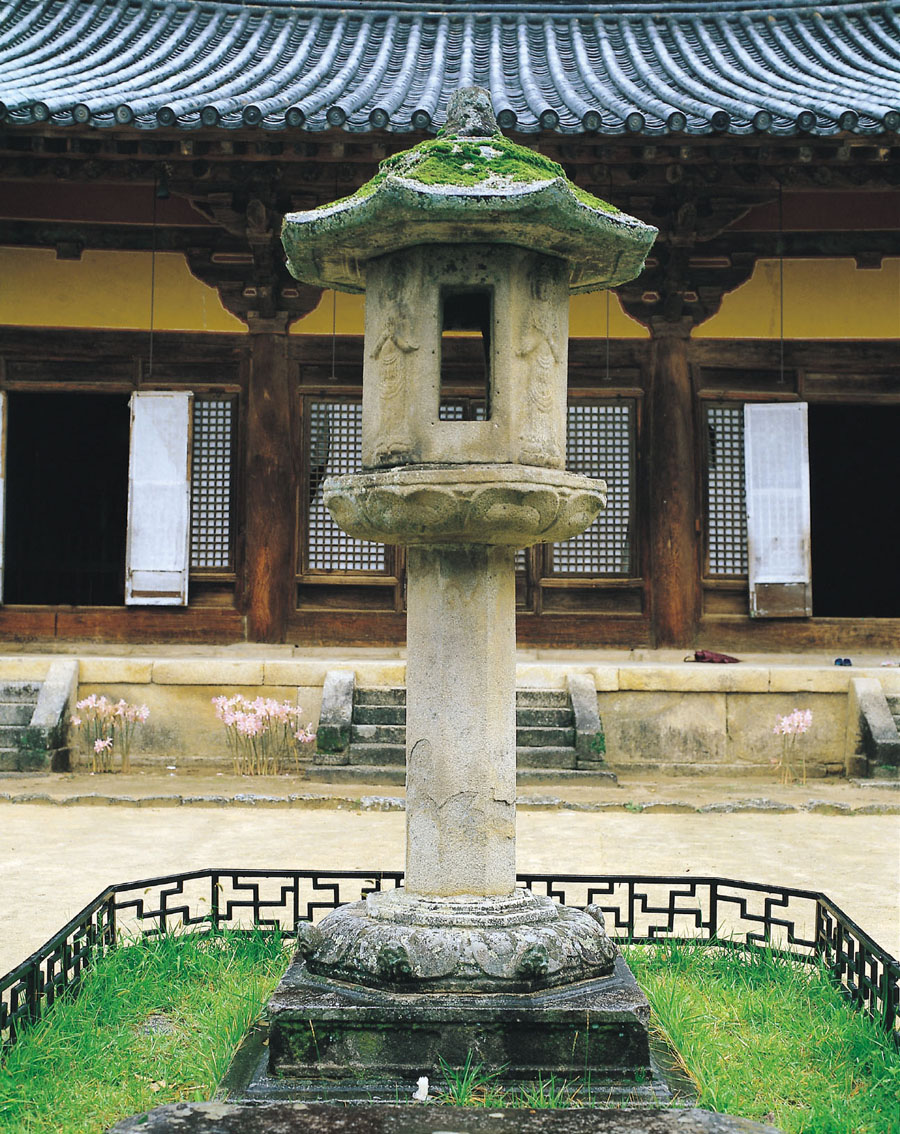

3. Stone Lantern (석등, Seokdeung)
Core Components
- 상륜부 (Finial): Finial
- 옥개석 (Roof Stone): Roof Stone
- 화사석 (Light Chamber): Light Chamber / Lamp Stone
- 화창 (Window): Light Window
- 상대석 (Upper Base): Upper Base Stone
- 간주석 (Center Pillar): Center Pillar / Shaft
- 하대석 (Lower Base): Lower Base Stone
- 지대석 (Foundation): Foundation Stone
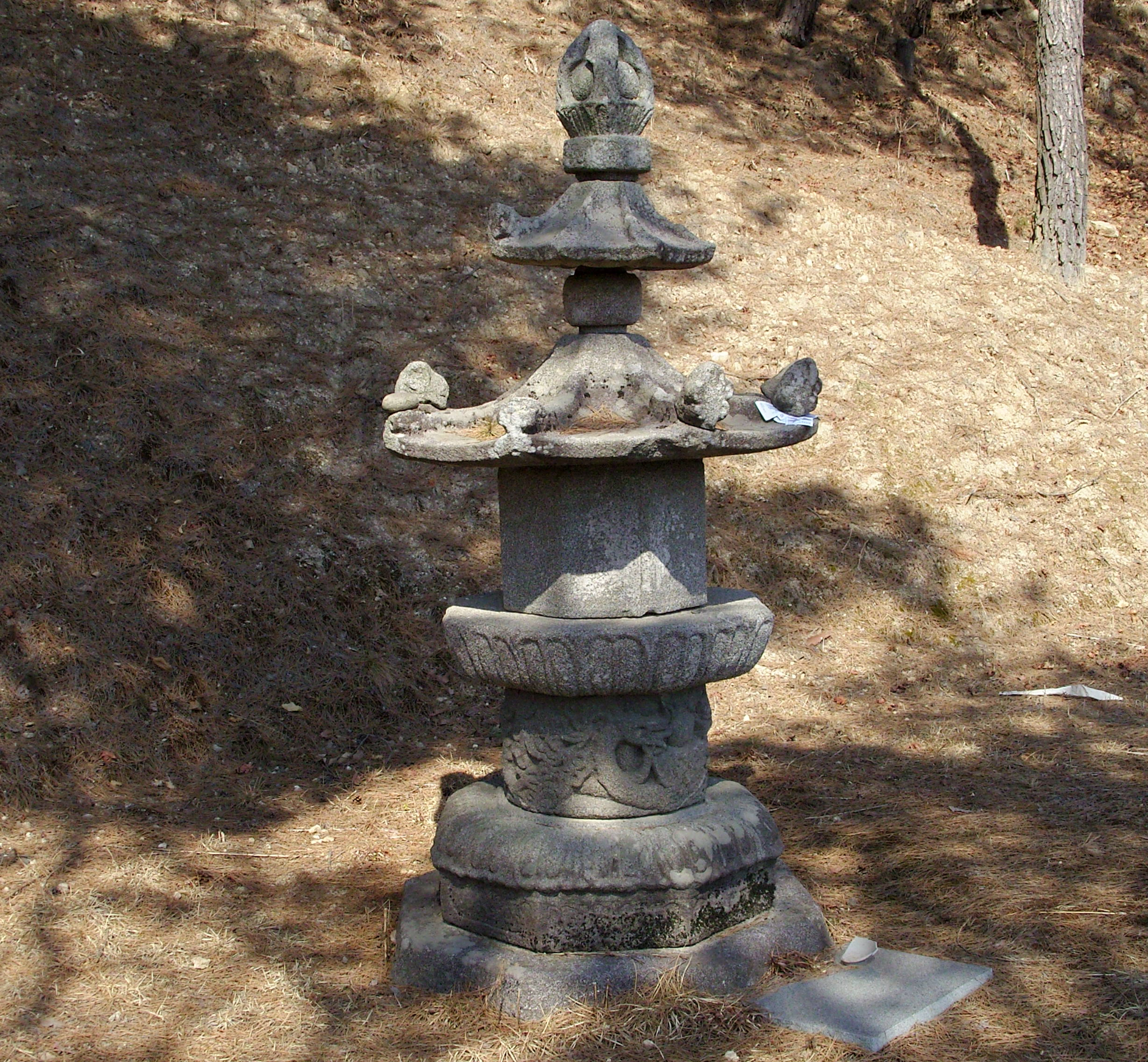
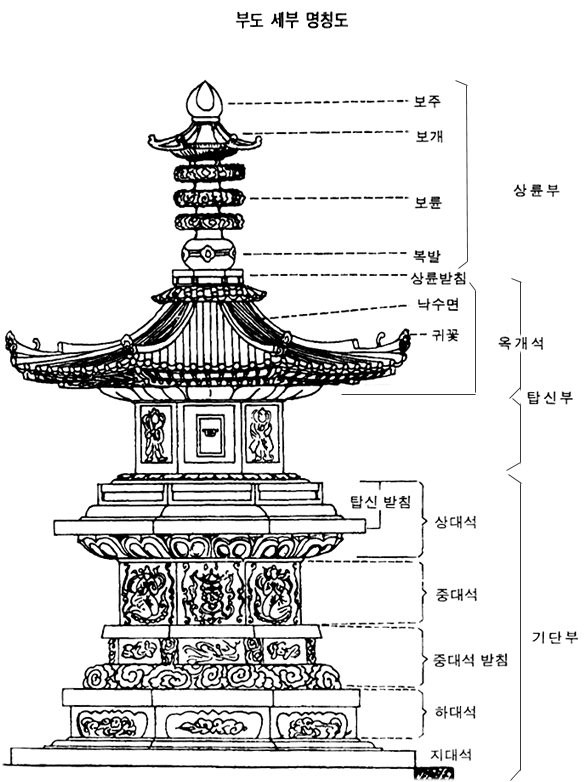
4. Stupa / Monk’s Stupa (부도탑/승탑, Budo/Seungtap)
General Structure
- 상륜부 (Finial): Finial
- 탑신부 (Body): Main Body
- 기단부 (Base): Base
Detailed Parts
- 보주 (Jewel): Precious Jewel
- 보개 (Canopy): Canopy
- 옥개석 (Roof Stone): Roof Stone
- 탑신석 (Body Stone): Body Stone (Relic Chamber)
- 상대석 (Upper Base): Upper Base (often with Lotus design)
- 중대석 (Middle Base): Middle Base (often with Cloud/Dragon design)
- 하대석 (Lower Base): Lower Base
Types (종류)
- 8각 원당형: Octagonal House Type
- 석종형: Stone Bell Type
Korean Buddhist Sculpture .pdf
Part I: Concepts and Iconography of Buddhist Images
1. Classification of Buddhist Icons
Buddhist sculptures are categorized into four to five main groups based on their spiritual status and iconographic roles:
- The Buddha (Tathagata): Refers to the "Enlightened One." While it originally represented Siddhartha Gautama, the development of Mahayana Buddhism introduced various other Buddhas like Amitabha (Lord of the Western Paradise), Bhaisajyaguru (Medicine Buddha), and Vairocana (the Cosmic Buddha).
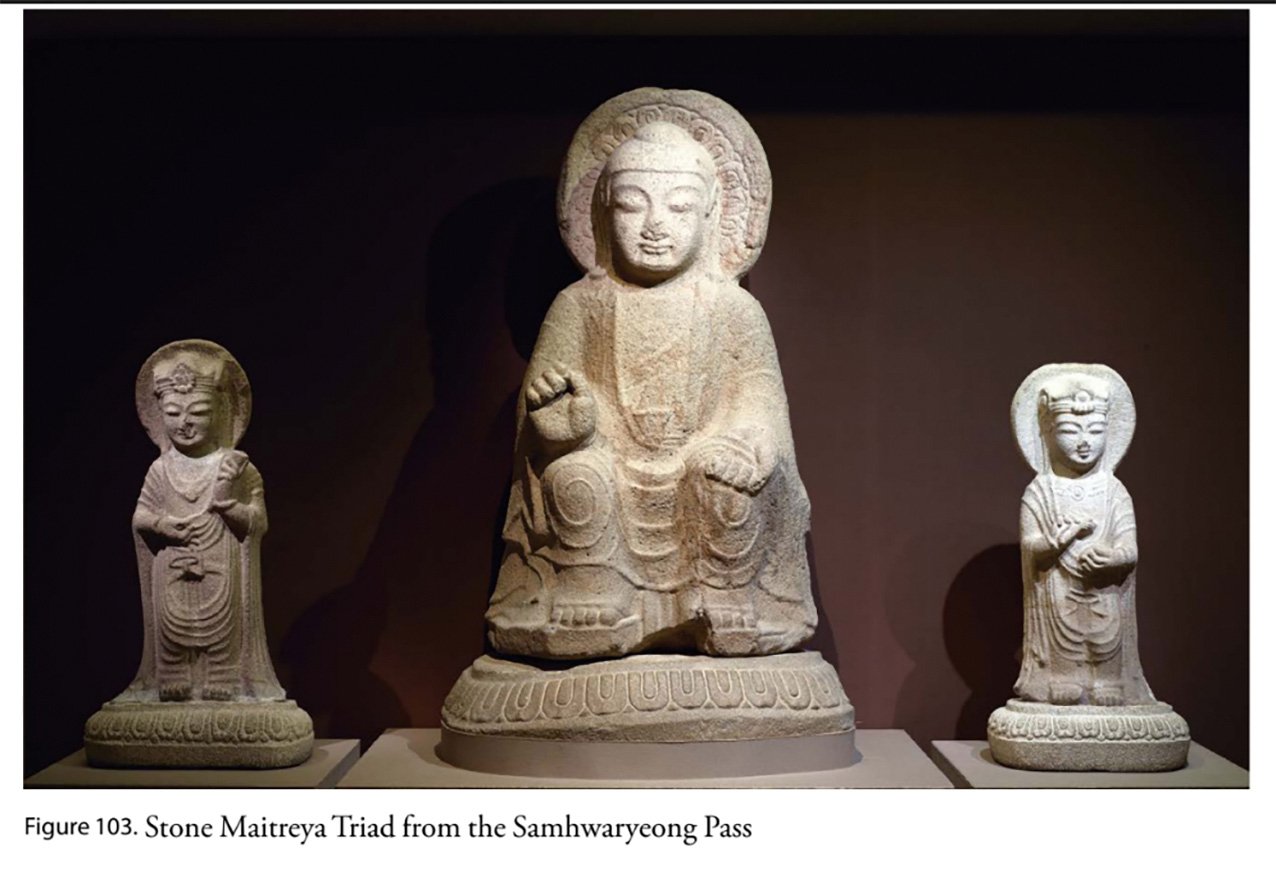
- Bodhisattvas: Beings who seek enlightenment for themselves while simultaneously working for the salvation of all living beings. They are often depicted with aristocratic elegance, wearing crowns and jewelry. Major figures include Avalokitesvara (Compassion), Maitreya (the Future Buddha), and Ksitigarbha (Savior of the Underworld).
- Deity/Protectors (Deva): Guardian deities of the Buddhist law, such as the Four Heavenly Kings (Sacheonwang) and the Vajra Warriors (Geumgang-yeoksa).
- Arhats (Nahan): Disciples of the Buddha who have attained the state of enlightenment through rigorous practice. They are typically depicted with realistic, human-like expressions.
2. Origins and Stylistic Characteristics
- Aniconic Period: For about 500 years after the Buddha’s death, he was represented by symbols like the Bodhi tree, footprints, or a stupa rather than a human figure.
- Emergence of Images: Buddhist statues first appeared around the 1st century CE in Gandhara (influenced by Greco-Roman realism) and Mathura (native Indian style).
- Iconographic Rules: To signify transcendence, Buddhas possess the "32 Major and 80 Minor Marks." Common features include the Ushnisha (cranial protuberance), Urna (third eye), and Samdo (three creases on the neck).
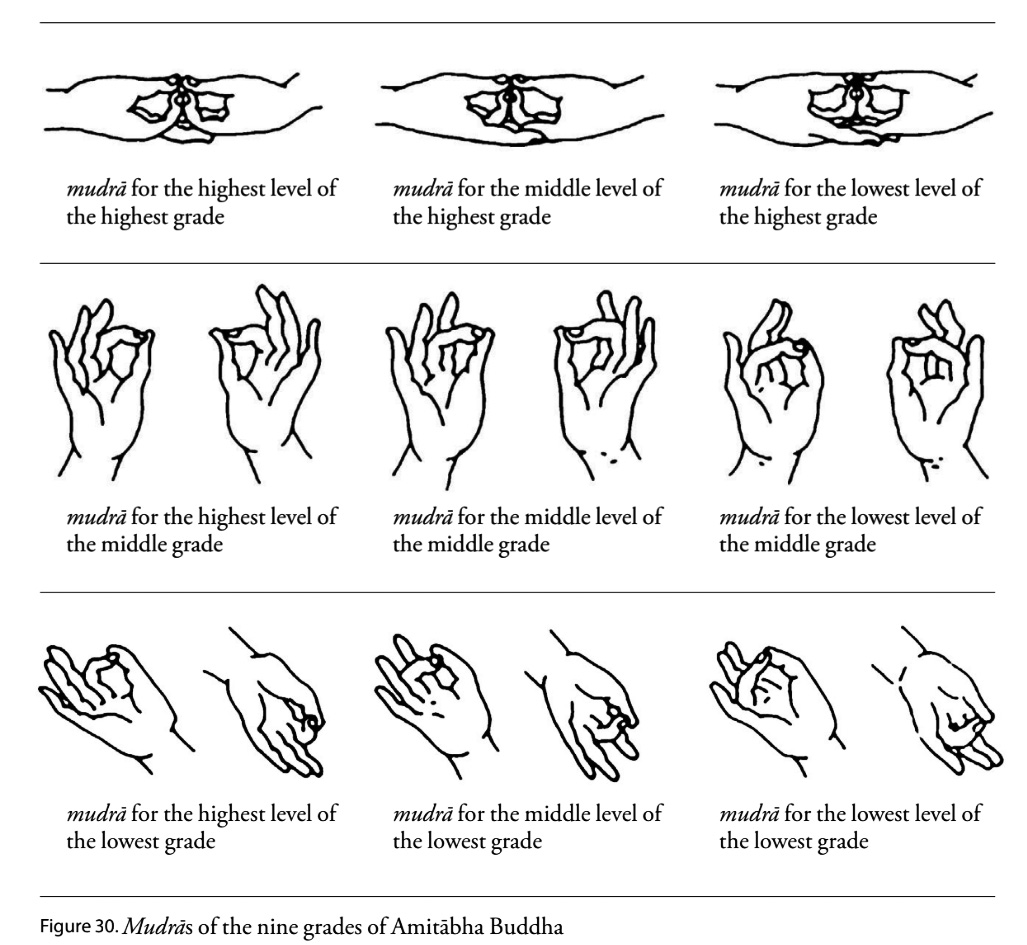
- Hand Gestures (Mudras): These symbolize specific actions or powers. For example, the Abhaya Mudra represents fearlessness, and the Bhumisparsha Mudra (earth-touching gesture) symbolizes the moment of enlightenment.
Part II: History and Development in Korea
1. Introduction of Buddhism
Buddhism was introduced to the Three Kingdoms from China:
- Goguryeo (372 CE): From Former Qin.
- Baekje (384 CE): From Eastern Jin via the monk Marananta.
- Silla (5th–6th Century): Officially recognized in 527 CE following the martyrdom of Ichadon.
2. Materials and Techniques
Korea’s unique contribution lies in its mastery of Stone Sculpture, specifically high-quality granite, which is difficult to carve but extremely durable. Other common materials included:
- Gilt-bronze: Used for portable or central temple icons.
- Iron: Popular during the late Silla and early Goryeo periods.
- Wood and Dry-lacquer: Became more prevalent in the later dynasties.
Part III: Major Masterpieces through the Eras
1. The Three Kingdoms Period (4th Century – 668 CE)
Early Korean sculpture was influenced by China’s Northern Wei style but soon developed a distinct "Korean Smile"—a look of warmth and benevolence.
- Gilt-bronze Standing Buddha with Inscription of "Yongga 7th Year": The oldest dated Korean Buddha, showing an elongated body and stylized drapery.
- Seosan Rock-carved Buddha Triad: Famous for the "Smile of Baekje," reflecting a gentle and humanistic approach to divinity.
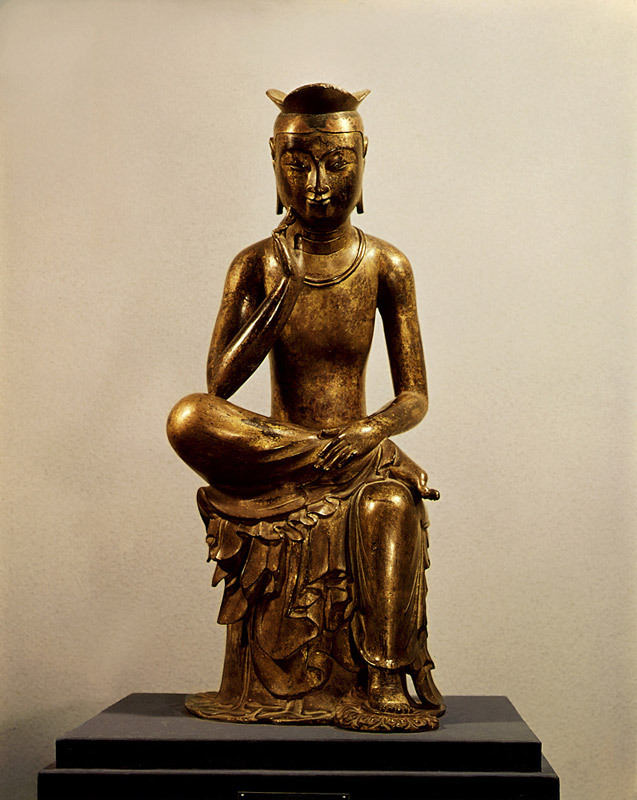
- Maitreya in Meditation (National Treasures No. 78 and 83): These pensive Bodhisattva statues represent the pinnacle of Three Kingdoms craftsmanship, balancing complex spiritual thought with elegant physical form.
2. Unified Silla (668 – 935 CE)
This was the "Golden Age" of Korean Buddhist art, characterized by realistic proportions and idealistic beauty influenced by International Tang Dynasty styles.
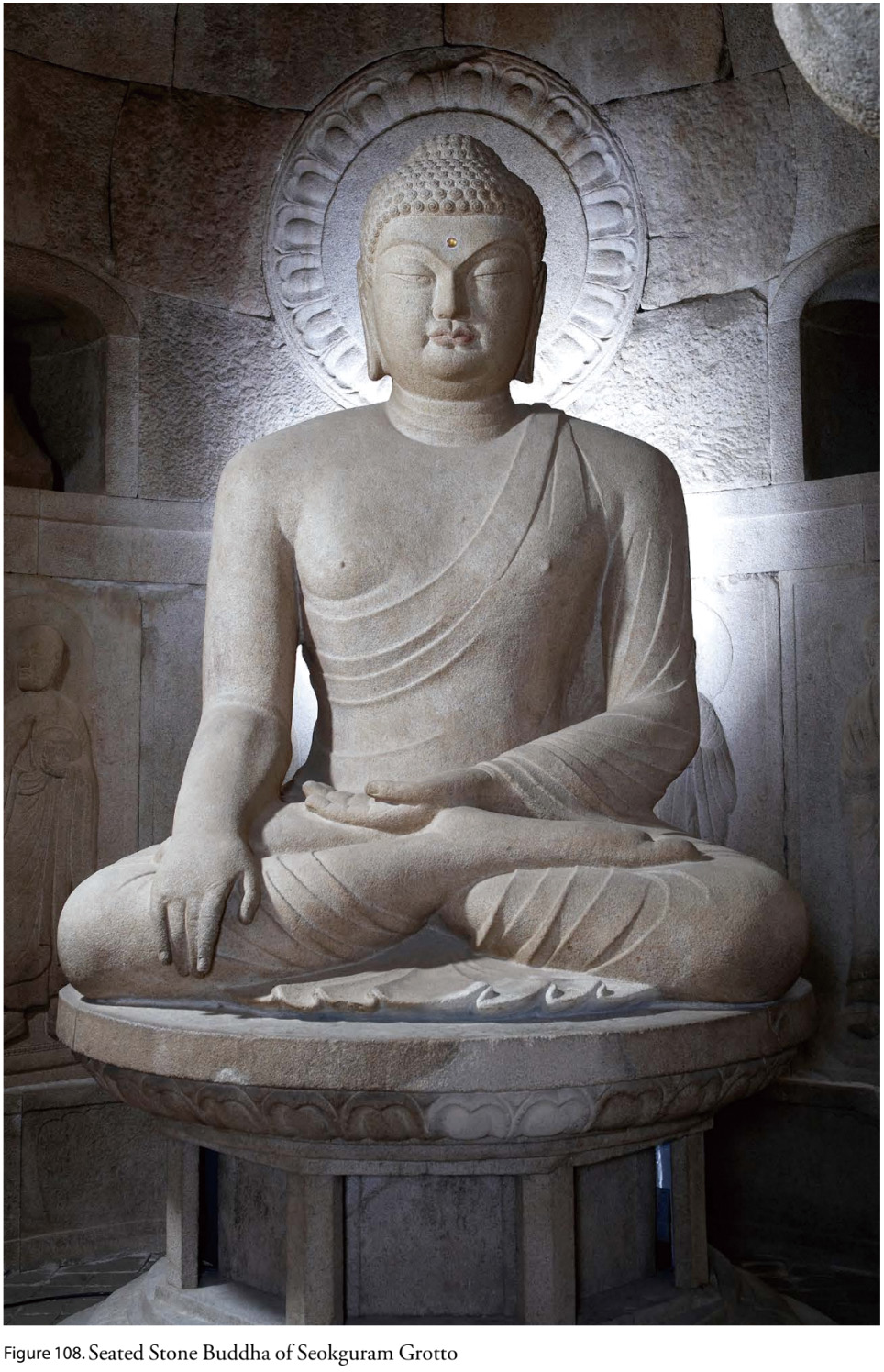
- Seokguram Grotto (mid-8th Century): A UNESCO World Heritage site. The main Buddha is considered one of the finest in the world, embodying perfect symmetry, sublime spiritual dignity, and sophisticated granite carving.
- Iron Buddhas (9th Century): Toward the end of the dynasty, the rise of Seon (Zen) Buddhism led to the creation of many iron statues, often representing Vairocana.
3. Goryeo Dynasty (918 – 1392 CE)
Goryeo sculpture shows a transition from the classical perfection of Silla to a more diverse, localized, and sometimes colossal style.
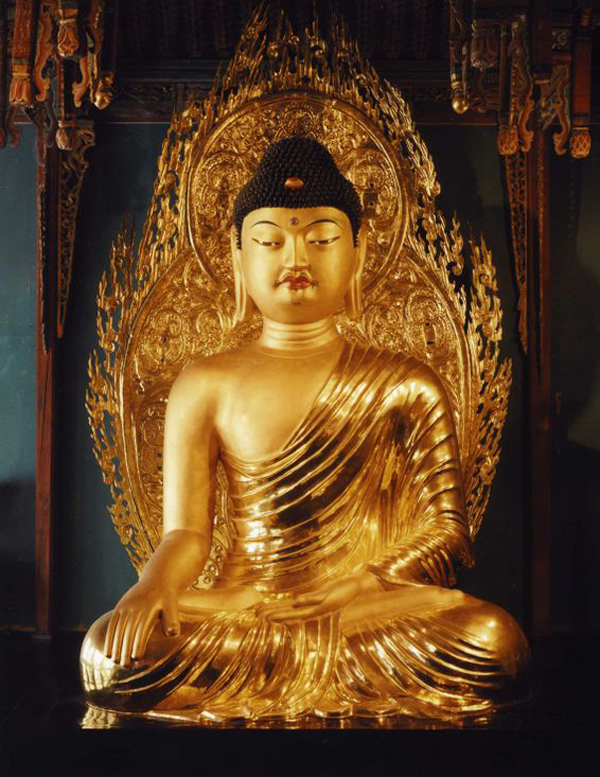
- Eunjin Mireuk (Pipsa-ri Maitreya): A massive stone statue representing the early Goryeo trend of creating regional, folk-style colossal Buddhas.
- Buseoksa Temple Clay Seated Buddha: A rare surviving clay statue that maintains the graceful traditions of the previous era.
- Dry-lacquer Statues: In the late Goryeo period, intricate dry-lacquer techniques were used to create highly detailed Bodhisattvas.
4. Joseon Dynasty (1392 – 1910)
Under the state policy of promoting Confucianism and suppressing Buddhism, large-scale royal patronage declined. However, Buddhist art continued in mountain monasteries.
- Wooden Sculptures: Most surviving Joseon statues are made of wood. They often feature larger heads, slightly hunched shoulders, and more simplified, schematic drapery, reflecting a move toward a more "folk" or approachable aesthetic.
Conclusion: The Legacy of Korean Buddhist Art
Korean Buddhist sculpture is not merely a copy of Chinese or Indian styles. It represents a unique synthesis of foreign influence and indigenous sensibility. The use of granite led to a monumental and robust aesthetic, while the "Korean Smile" added a layer of warmth and accessibility. These works remain a vital part of Korea's cultural and spiritual identity, showcasing a millennium of artistic evolution.
한국의 불교 조각 (Korean Buddhist Sculpture)
제1부: 불상의 개념과 상징 (The Concept of the Buddhist Image)
1. 불교 도상의 분류
불교 조각은 도상학적 특성에 따라 크게 다섯 부류로 나뉩니다.
-
부처 (Buddha): '깨달은 자'를 의미하며, 역사적 부처인 석가모니 외에도 대승불교의 발달로 비로자나불, 아미타불, 약사여래 등 다양한 여래가 등장합니다.
-
보살 (Bodhisattva): 깨달음을 구하면서 동시에 중생을 구제하는 존재로, 관세음보살, 대세지보살, 문수보살, 보현보살, 지장보살 등이 대표적입니다. 주로 화려한 관과 장신구를 걸친 귀족적인 모습으로 표현됩니다.
-
명왕 (Wisdom King): 부처의 명령을 받아 악을 굴복시키는 분노의 형상을 한 신들입니다. 한국에서는 드물게 나타납니다.
-
천부 (Deva): 불법을 수호하는 인도의 토착 신들로, 사천왕, 제석천, 범천, 금강역사 등이 포함됩니다.
-
나한 (Arhat): 최고의 깨달음을 얻은 성자로, 주로 수행자의 모습으로 묘사됩니다.
2. 불상의 기원과 형태적 특징
-
무불상 시대 (Aniconic Period): 부처 사후 약 500년간은 직접적인 형상 대신 불탑(stupa), 보리수, 금강좌 등의 상징물을 숭배했습니다.
-
불상의 탄생: 기원후 1세기경 간다라(그리스 양식 영향)와 마투라(인도 본토 양식)에서 거의 동시에 시작되었습니다.
-
도상학적 규칙: 부처는 인간을 초월한 존재로 묘사하기 위해 '32상 80종호'라는 신체적 특징을 갖춥니다. 육계(머리 위의 혹), 백호(눈썹 사이의 흰 털), 삼도(목의 세 줄 주름) 등이 대표적입니다.
-
법의(Clothing): 가사를 입는 방식은 양 어깨를 다 덮는 '통견'과 오른쪽 어깨를 드러내는 '편단우견'으로 구분됩니다.
- 수인(Mudra): 손 모양을 통해 부처의 서원과 깨달음을 표현합니다. 선정인(명상), 항마촉지인(깨달음의 증명), 전법륜인(설법), 시무외·여원인(두려움 제거와 소원 수리) 등이 주요 수인입니다.
제2부: 한국 불상의 역사와 변천 (Historical Overview)
1. 불교의 전래와 초기 양식
- 고구려(372년): 전진(前秦)으로부터 승려 순도와 함께 불상과 경전이 전해졌습니다.
- 백제(384년): 동진(東晉)의 승려 마라난타를 통해 불교가 전해졌습니다.
- 신라(5세기 중반): 고구려를 통해 묵호자, 아도화상 등에 의해 전해졌으며 527년 이차돈의 순교 이후 공인되었습니다.
2. 한국 불상의 재료와 제작 기법
한국은 풍부하고 질 좋은 화강암을 바탕으로 한 **석불(Stone)**이 주류를 이루었으며, 이 외에도 금동불, 철불, 목불, 소조불(찰흙), 건칠불(삼베와 칠) 등이 제작되었습니다. 특히 통일신라 이후 철불이 유행하고 고려 시대에는 건칠불이 등장하는 등 재료의 다양화가 이루어졌습니다.
제3부: 시대별 주요 불상 분석 (Major Examples)
1. 삼국시대 (The Three Kingdoms Period)
이 시기의 불상은 중국 북위 양식의 영향을 받았으나 점차 한국적인 미감인 '신비로운 미소'와 부드러운 선을 찾아갑니다.
-
고구려 '연가7년'명 금동여래입상 (539년 추정): 현존하는 가장 오래된 명문 포합 불상으로, 강건한 기상과 투박한 미소가 특징입니다.
-
백제 서산 용현리 마애여래삼존상: '백제의 미소'로 불리는 온화한 표정을 보여주는 마애불의 걸작입니다.
-
신라 경주 배동 석조여래삼존입상: 어린아이 같은 천진난만한 미소와 볼륨감 있는 신체 표현이 돋보입니다.
-
금동미륵보살반가사유상 (국보 78호, 83호): 삼국시대 불교 신앙의 핵심인 미륵 신앙을 대변하며, 고도의 주조 기술과 사유의 철학적 깊이를 보여주는 세계적 명작입니다.
2. 통일신라시대 (The Unified Silla Period)
한국 불교 조각의 황금기이며, 사실적인 신체 묘사와 이상적인 조형미가 정점에 달한 시기입니다.
-
석굴암 본존불 (8세기 중반): 완벽한 비례, 당당한 체구, 숭고한 정신성이 결합된 한국 불상 조각의 최고봉입니다. 항마촉지인을 하고 있으며, 석굴 내 다른 부조들과 함께 불국토의 정수를 구현했습니다.
-
감산사 석조아미타여래입상 및 미륵보살입상 (719년): 인도의 굽타 양식 영향이 나타나는 풍만한 신체와 화려한 장식성을 보여줍니다.
-
비로자나불의 유행 (9세기): 선종의 보급과 함께 지권인을 한 비로자나불과 철조 불상의 제작이 크게 늘어났습니다.
3. 고려시대 (The Goryeo Period)
신라의 전통을 계승하면서도 점차 세속화되고 거대한 불상이 제작되는 등 독자적인 특징이 나타납니다.
-
논산 관촉사 석조미륵보살입상 (은진미륵): 18미터가 넘는 거대한 규모를 자랑하며, 비례보다는 강렬한 민중적 에너지를 보여주는 고려 초기 지방 양식의 대표작입니다.
-
영주 부석사 소조여래좌상: 통일신라의 양식을 계승한 단아하고 기품 있는 고려 최고의 소조 불상입니다.
-
안동 건칠보살좌상: 고려 후기 티베트 불교 양식의 영향으로 화려한 보관과 장신구가 특징인 건칠 불상입니다.
4. 조선시대 (The Joseon Period)
억불 정책의 영향으로 전반적으로 위축되었으나, 임진왜란 이후 사찰 재건과 함께 목조 불상이 대량으로 제작되었습니다. 신체 비례가 다소 무너지고 머리가 커지며 구부정한 자세를 취하는 등 도식적인 변화가 나타나지만, 친근하고 소박한 예술적 특징을 지닙니다. 아미타불 목조 불상과 목각탱화 등이 이 시기의 주요 성과입니다.
결론: 한국 불교 조각의 의의
한국의 불교 조각은 중국으로부터 도입된 양식을 단순히 수용한 것에 그치지 않고, 화강암이라는 단단한 재료를 다루는 뛰어난 기술과 한국 특유의 온화하고 자비로운 미감을 결합하여 독창적인 예술 세계를 구축했습니다. 특히 통일신라의 석굴암은 세계 미술사적으로도 보편적인 가치를 지니는 걸작으로 평가받습니다.
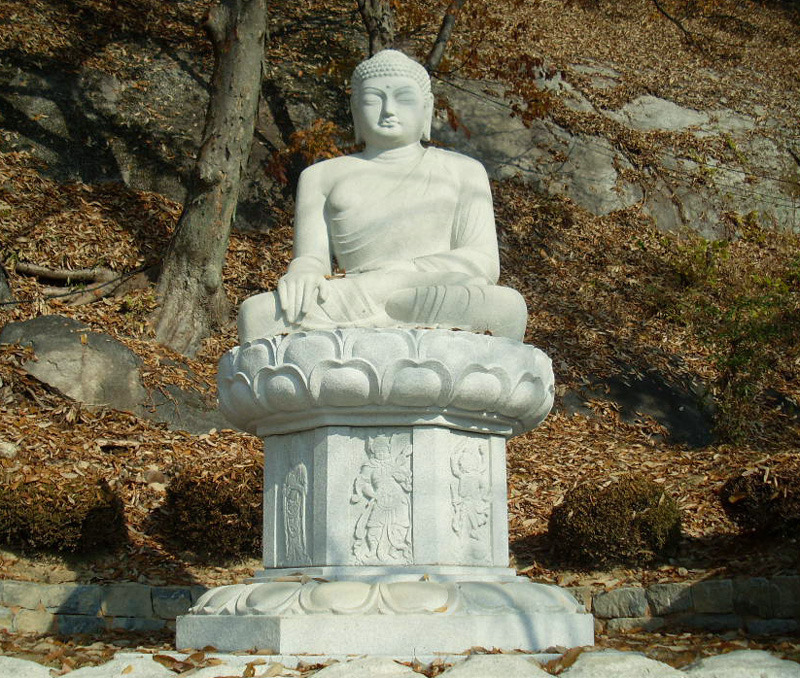
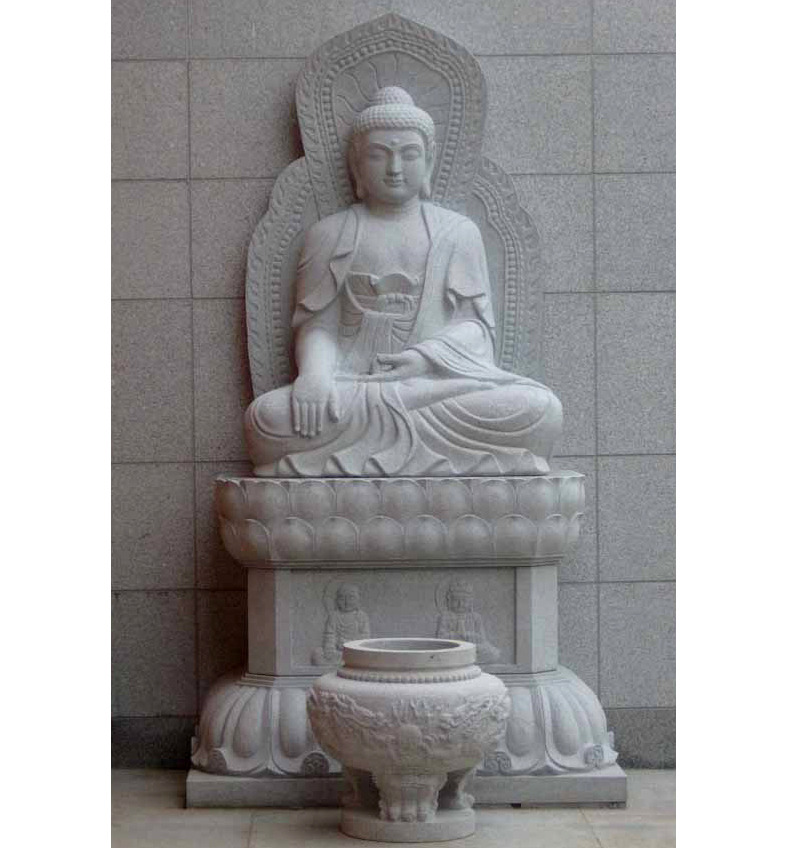
Seated Stone Shakyamuni Buddha: Enshrined to the right of Muryangsujeon Hall at Buseoksa Temple (Height: 3m)
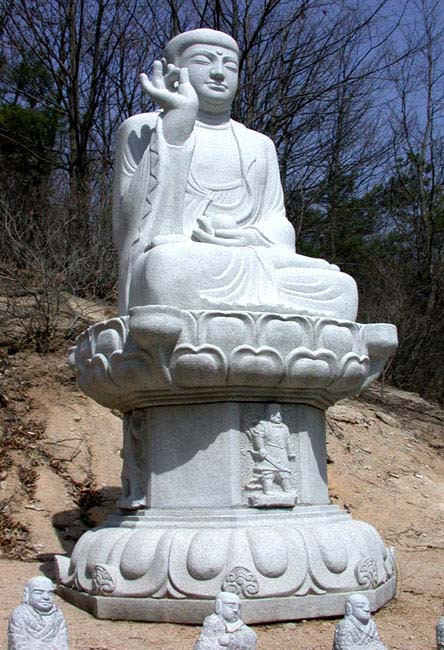
Amitabha Buddha: Enshrined at Tongcheonsa Temple, Daegu.
Seated Bhaisajyaguru Buddha (Medicine Buddha): Height 3.5m, enshrined at Heungguksa Temple in Namyangju, Gyeonggi-do.

Stone Avalokitesvara Bodhisattva: Enshrined in Gimcheon.
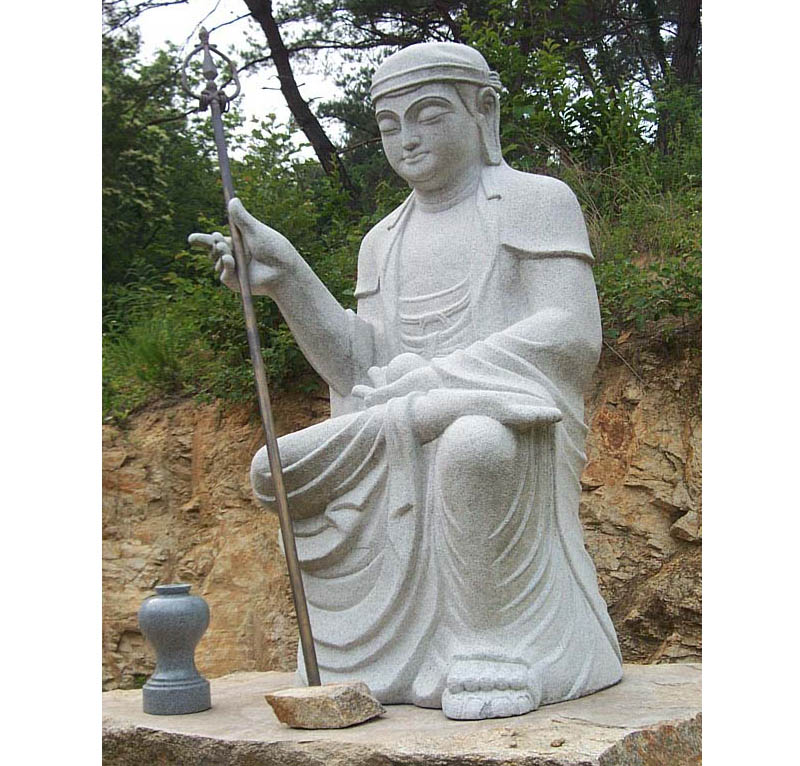
Stone Ksitigarbha Bodhisattva (Half-seated Pensive Statue): Enshrined at Palgongsan Mountain, Daegu.
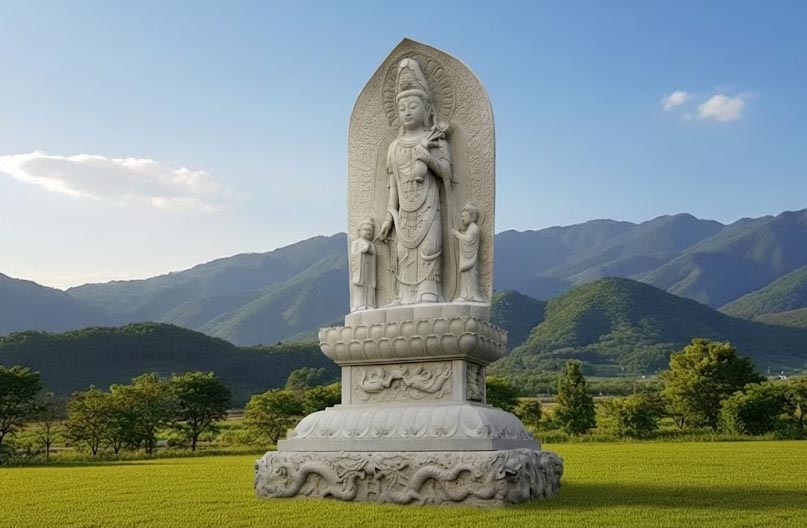
Stone Avalokitesvara Bodhisattva: Height 5m, enshrined at Guramsa Temple, Palgongsan Mountain, Daegu.
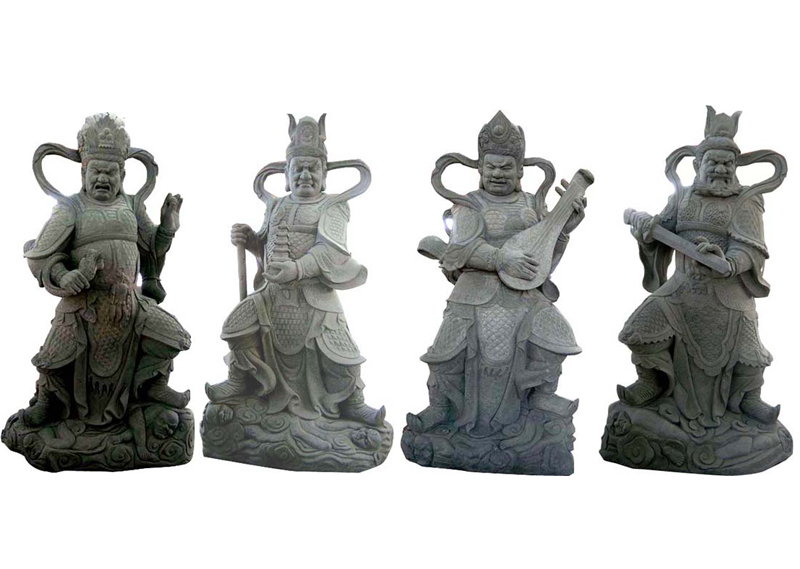
Statues of the Four Heavenly Kings: Enshrined at Yongjuam Hermitage, Palgongsan Mountain, Daegu.
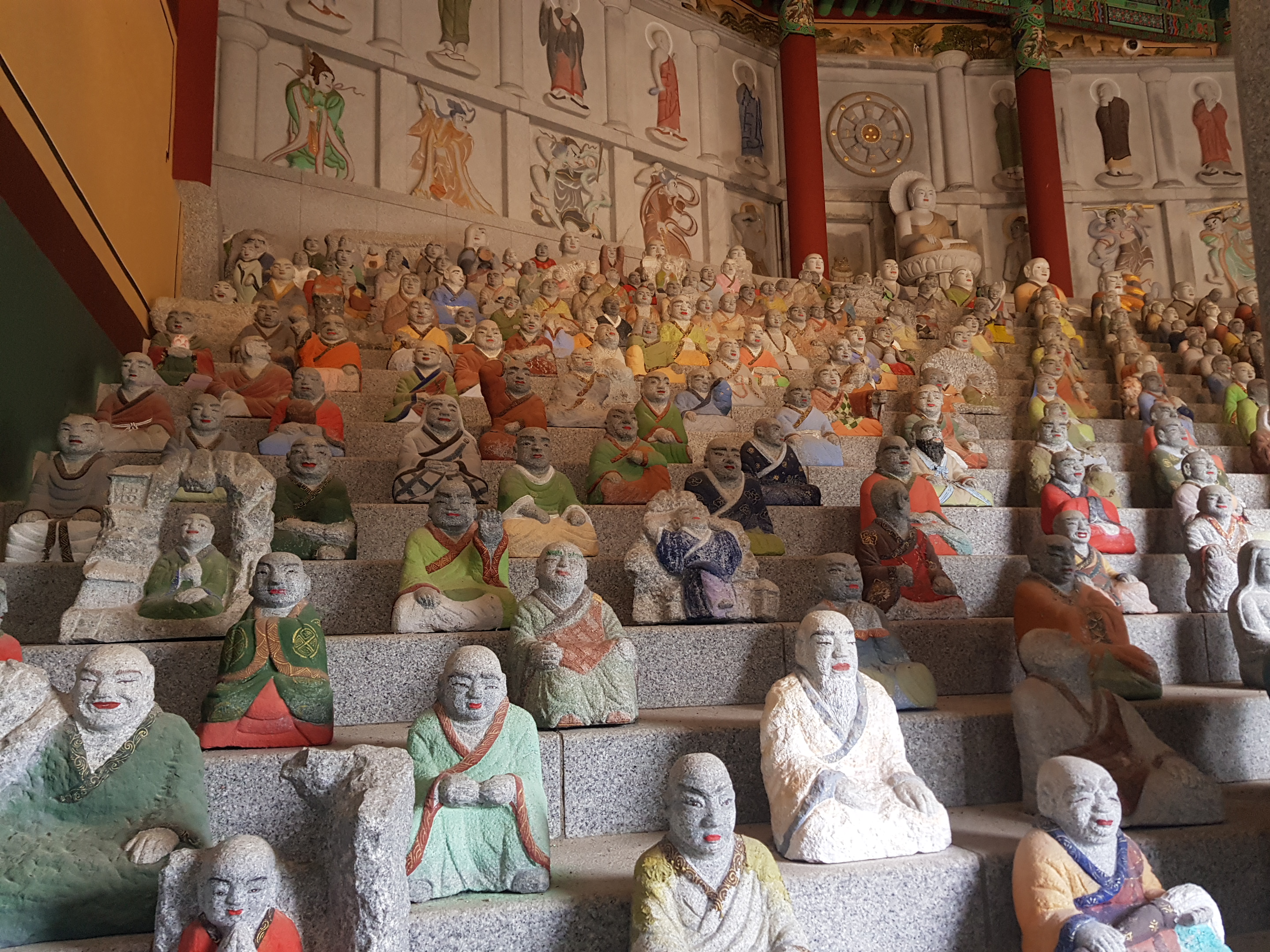
500 Arhats: Enshrined at Daewonsa Temple, Gapyeong.

Octagonal Nine-story Stone Pagoda: Height 15m, located at Seonggwansa Temple, Janggye-myeon, Jangsu-gun, Jeonbuk.
https://www.buddhas.kr
석조불상
석조불상에 깃든 염원, 천 년을 이어갈 불사(佛事) 독창적 융합이 작품은 단순히 기존의 불상을 모방한 것이 아니라, '구원(지장보살)'과 '사유(반가사유상)'라는 두 가지 철학적 주제를 하나의
www.buddhas.kr