
The Hero of Compassion: A Comprehensive Study of the Bodhisattva
I. Introduction: The Spiritual Warrior
In the grand tapestry of Buddhist philosophy, no figure is as compelling, dynamic, or universally beloved as the Bodhisattva (Sanskrit: Bodhisattva; Korean: 보살 Bosal; Chinese: Pusa).
While the Arhat represents the summit of self-discipline and the Buddha represents the ultimate attainment of Truth, the Bodhisattva represents the active force of compassion in the world. The term is a compound of two Sanskrit words:
- Bodhi: Awakening, Enlightenment, or Supreme Knowledge.
- Sattva: Being, Essence, or Spirit.
Thus, a Bodhisattva is an "Awakening Being" or "One bound for Enlightenment." However, in the Mahayana tradition (dominant in Korea, China, Japan, and Tibet), the definition goes deeper. The Bodhisattva is one who, having reached the doorway to Nirvana, voluntarily turns back. They refuse to enter the bliss of final liberation as long as a single sentient being remains trapped in the cycle of suffering (Samsara).
They are the spiritual heroes who declare: "I will not cross to the other shore until I have ferried all beings across."
II. Historical Evolution: From Jataka to Mahayana
The concept of the Bodhisattva did not appear fully formed; it evolved over centuries, transforming from a historical title to a universal ideal.
1. Early Buddhism (Theravada Context)
In the earliest texts (Pali Canon), the term Bodhisatta was used rarely. It referred almost exclusively to Siddhartha Gautama before his enlightenment, or to his previous lives.
- The Jataka Tales: These are 547 stories recounting the Buddha’s past lives—as a rabbit, a king, an elephant, or a merchant. In every life, he perfected his virtues (generosity, patience, courage).
- The Singular Path: In this view, the Bodhisattva path was a rare, heroic destiny reserved for extraordinary beings like Shakyamuni or the future Buddha, Maitreya.
2. The Mahayana Revolution
Around the 1st century BCE, a radical shift occurred. A new movement, which called itself Mahayana ("The Great Vehicle"), argued that the Arhat’s goal of personal liberation was too narrow.
- Universal Buddhahood: Mahayana sutras taught that all beings have "Buddha Nature" (Tathagatagarbha). Therefore, the path of the Bodhisattva was not just for the chosen few, but the duty of every practitioner.
- The Shift in Goal: The goal shifted from becoming an Arhat (Self-Liberation) to becoming a Buddha (Perfect Enlightenment to help others). The Bodhisattva became the ideal model for this journey.
III. The Core Philosophy: Bodhicitta
The defining characteristic of a Bodhisattva is the arousal of Bodhicitta (The Mind of Enlightenment). Without this specific motivation, acts of kindness are merely "good karma," not the path of the Bodhisattva.
Bodhicitta has two aspects:
1. Relative Bodhicitta (The Wish)
This is the heartfelt aspiration to attain enlightenment for the benefit of others. It is encapsulated in the Four Great Vows chanted daily in temples across East Asia:
Sentient beings are numberless; I vow to save them. Delusions are inexhaustible; I vow to end them. Dharma gates are boundless; I vow to enter them. The Buddha Way is unsurpassable; I vow to attain it.
2. Absolute Bodhicitta (The Wisdom)
This is the realization of Sunyata (Emptiness). A true Bodhisattva understands that while they vow to save all beings, there are—in the ultimate sense—no "beings" to be saved.
- The Paradox: If a Bodhisattva thinks, "I am a savior and you are the saved," they are trapped in duality and ego. They must save beings while realizing that the "self" and "beings" are empty of inherent existence. This is the "Wisdom that grasps Emptiness" combined with the "Compassion that grasps Sentient Beings."
IV. The Path of Practice: The Six Paramitas
How does a Bodhisattva live? They do not retreat from the world but engage with it through the practice of the Six Paramitas (Perfections). These are virtues cultivated to their absolute limit.
1. Dana Paramita (Generosity)
Giving without expectation of reward. This includes giving material aid, giving protection from fear, and—highest of all—giving the Dharma (truth).
- The Extreme: In Jataka tales, the Bodhisattva gave his own eyes and body to those who asked, symbolizing total non-attachment to the self.
2. Sila Paramita (Ethical Discipline)
Observing precepts not out of fear of punishment, but to avoid harming any living thing. It is the cultivation of a harmless nature.
3. Ksanti Paramita (Patience/Forbearance)
The ability to endure hardship, insults, and physical pain without anger.
- Psychology: If someone insults a Bodhisattva, they do not react with rage. They view the insulter as a sick person needing medicine, or they view the insult as a result of their own past karma.
4. Virya Paramita (Vigor/Energy)
Joyful perseverance. It is the tireless energy to do good. A Bodhisattva does not burn out because their energy source is compassion, which is infinite, rather than ego, which is finite.
5. Dhyana Paramita (Meditation)
Concentration and mental stability. Without a calm mind, wisdom cannot arise.
6. Prajna Paramita (Wisdom)
The perfection of wisdom—the direct realization of Emptiness. This is the eye that guides the other five perfections. Without wisdom, generosity can be misguided and patience can become passivity.
V. The Celestial Pantheon: Major Bodhisattvas
In Mahayana devotional practice, certain Bodhisattvas are revered as high-level cosmic beings—essentially deities who have the power to intervene in human affairs. These are the "Great Bodhisattvas" (Mahasattvas).
1. Avalokitesvara (Korean: Gwan-eum / Gwaneum)
- Title: The Bodhisattva of Compassion. "The One Who Perceives the Sounds of the World."
- Iconography: Often depicted with a willow branch and a vase of healing water. In later East Asian art, frequently depicted as female (Goddess of Mercy), transcending gender. Also shown with 1,000 hands and eyes, symbolizing the ability to see all suffering and the tools to help everyone.
- Significance: The most popular figure in East Asian Buddhism. Devotees chant her name for help in this life (safety, health, children).
2. Manjusri (Korean: Munsu)
- Title: The Bodhisattva of Great Wisdom.
- Iconography: Depicted riding a lion (symbolizing the roar of the Dharma that wakes the deluded). He holds a flaming sword in one hand to cut through the net of ignorance.
- Significance: He represents the intellectual aspect of Buddhism—insight, clarity, and memory. He is the patron of scholars and students.
3. Ksitigarbha (Korean: Jijang)
- Title: The Bodhisattva of the Great Vow.
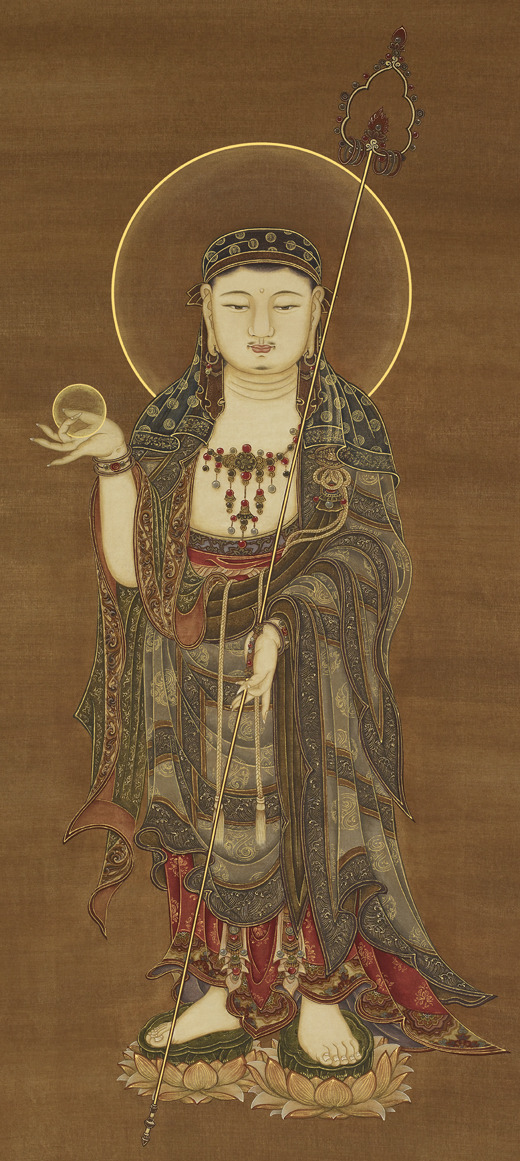
- Iconography: Unlike others who wear princely robes, Ksitigarbha is dressed as a simple monk with a shaved head. He holds a staff with six rings (to open the gates of hell) and a wish-fulfilling jewel.
- The Vow: "Not until the hells are emptied will I become a Buddha." He is the savior of the dead, guiding souls through the underworld and comforting those in the darkest realms of existence.
4. Samantabhadra (Korean: Bohyeon)
- Title: The Bodhisattva of Great Practice and Action.
- Iconography: Rides a white elephant with six tusks (representing the six Paramitas).
- Significance: While Manjusri represents the theory (wisdom), Samantabhadra represents the application (practice) of the teachings in the real world.
5. Maitreya (Korean: Mireuk)
- Title: The Future Buddha.
- Status: Currently resides in the Tushita Heaven, waiting for the proper time to be born on Earth when the Dharma has been forgotten.
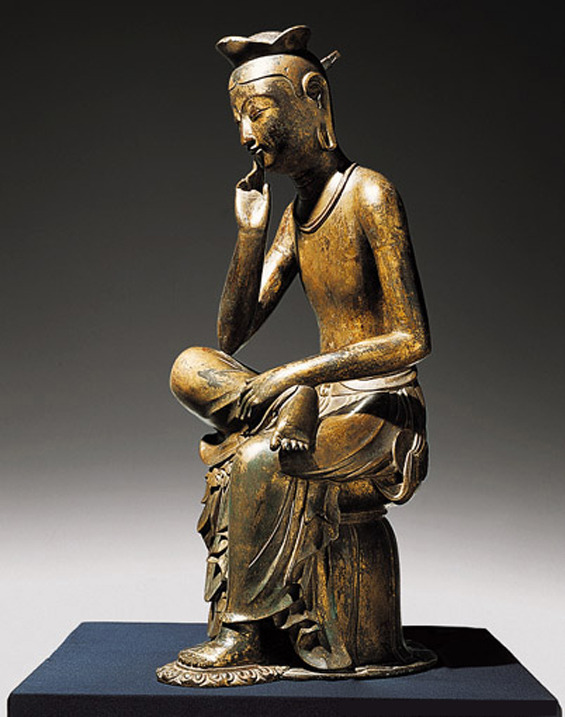
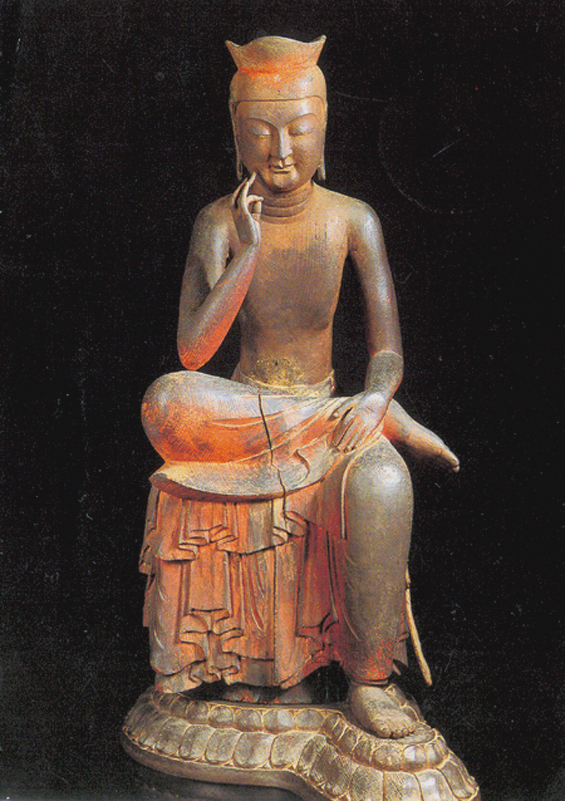
- Iconography: Often depicted as the "Laughing Buddha" (in Chinese folklore) or as a seated figure with one leg crossed (the Pensive Bodhisattva), planning how to save the world.
VI. Visual Identity: Art and Iconography
How do you distinguish a Bodhisattva from a Buddha in a temple?
The Buddha is usually depicted in simple monastic robes, unadorned, representing the renunciation of worldly status. He sits in deep meditation, often with eyes half-closed.
The Bodhisattva, conversely, is dressed like royalty.
- Attire: They wear crowns, necklaces, armbands, floating silk scarves, and elaborate jewelry.
- Symbolism: This is not vanity. It symbolizes that the Bodhisattva remains in the world. They have not left the "palace" of existence. The jewelry represents the "spiritual riches" of their virtues.
- Posture: While Buddhas often sit in full lotus, Bodhisattvas often stand, or sit in the "Royal Ease" posture (one leg down), indicating readiness to stand up and help at a moment's notice.
VII. The Ten Bhumis (Stages)
The path from a common person to a fully enlightened Buddha is mapped out in the Ten Bhumis (Grounds/Stages) of the Bodhisattva path. This journey is said to take three "incalculable aeons," though this is often viewed metaphorically.
- The Joyous: Realizing the emptiness of self; filled with joy at entering the path.
- The Stainless: Perfection of ethics; removing all impurities of conduct.
- The Luminous: Perfection of patience; the light of Dharma begins to shine.
- The Radiant: Perfection of vigor; burning away the remaining dualistic views.
- The Difficult to Conquer: Perfection of meditation; deep understanding of the Four Noble Truths.
- The Approaching: Perfection of wisdom; realizing the emptiness of all phenomena ("dependent origination").
- The Gone Afar: Skillful means (Upaya); can manifest in any form to help others.
- The Immovable: No longer falls back into delusion. Actions become effortless/automatic.
- The Good Intelligence: Perfection of power; possesses the complete knowledge of teaching.
- The Cloud of Dharma: The final stage before Buddhahood. They shower the rain of Dharma upon the universe like a nourishing cloud.
VIII. Modern Relevance: Socially Engaged Buddhism
In the 20th and 21st centuries, the Bodhisattva ideal has been reinterpreted through the lens of Socially Engaged Buddhism.
Thinkers like Thich Nhat Hanh (Vietnam) and the Dalai Lama (Tibet) have argued that in the modern world, a Bodhisattva cannot just sit in a temple praying.
- The Modern Bodhisattva: The environmentalist protecting the forest, the hospice worker holding the hand of the dying, the activist fighting for human rights—these are viewed as modern manifestations of the Bodhisattva spirit.
- Interbeing: This concept teaches that "I am you, and you are me." Therefore, your suffering is my suffering. The Bodhisattva fights structural violence (war, poverty, racism) because these are barriers to the enlightenment of beings.
"When bombs begin to fall on people, you cannot stay in the meditation hall all of the time. Meditation is about the awareness of what is going on—not only inside of your body and your feelings, but all around you." — Thich Nhat Hanh
IX. Conclusion: The Endless Vow
The Bodhisattva is the ultimate expression of the Mahayana paradox: Total detachment combined with total involvement.
They are detached from the outcome (they don't need praise), but they are totally involved in the process of helping. They bridge the gap between the sacred and the secular, showing us that enlightenment is not found in escaping the world, but in embracing it with wisdom and love.
Whether viewed as celestial deities like Avalokitesvara who answer prayers, or as an ethical ideal for human behavior, the Bodhisattva represents the highest potential of the human spirit—the capacity to care for others more than oneself.
In a world often defined by competition and self-interest, the Bodhisattva stands as a timeless reminder that true freedom is found only in the service of others.
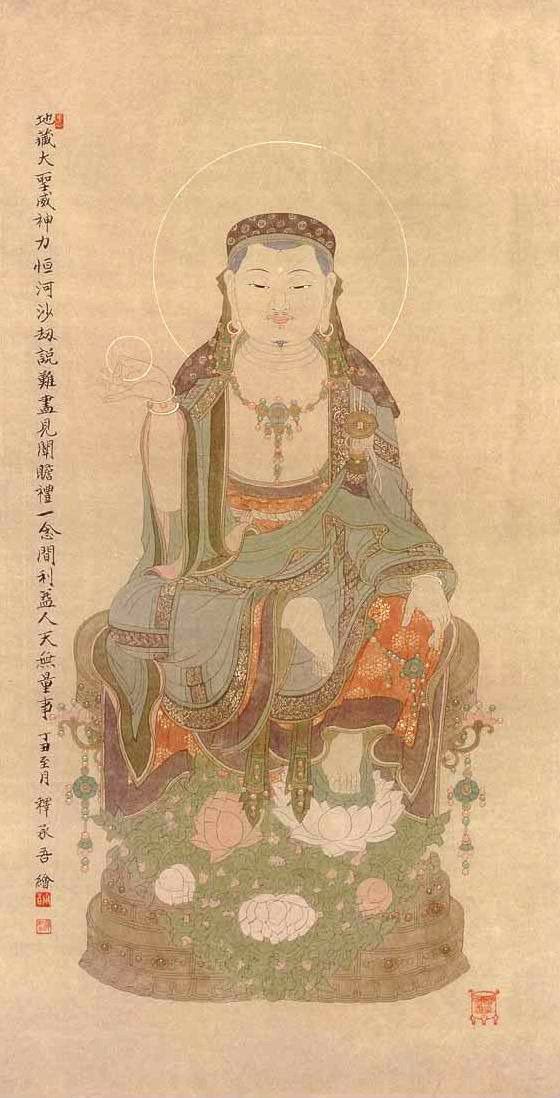
Earth Store Bodhisattva
지장보살(地藏菩薩) Ksitigarbha, Earth Store Bodhisattva.
Manjusuri
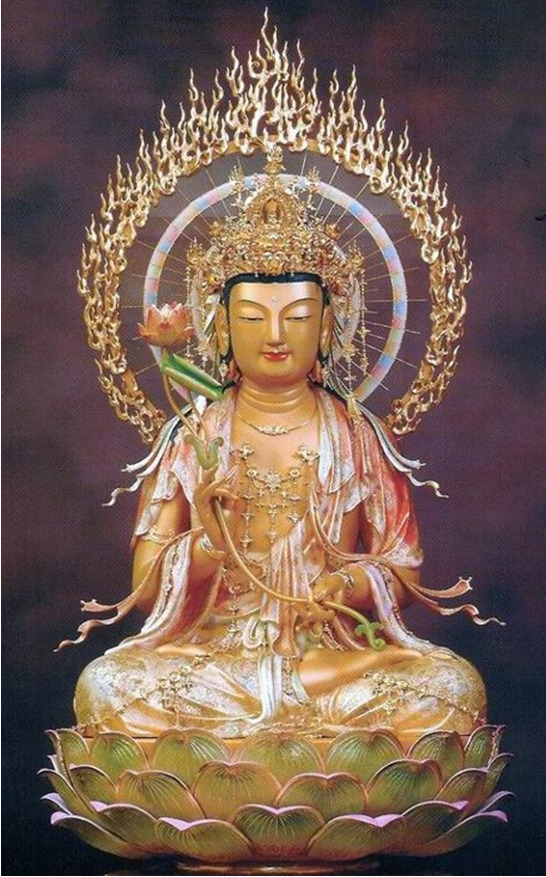
문수보살(文殊菩薩) Manjushiri Bodhisattva / the Bodhisattva of wisdom and intellec
Manjusuri, Bodhisattva of Wisdom
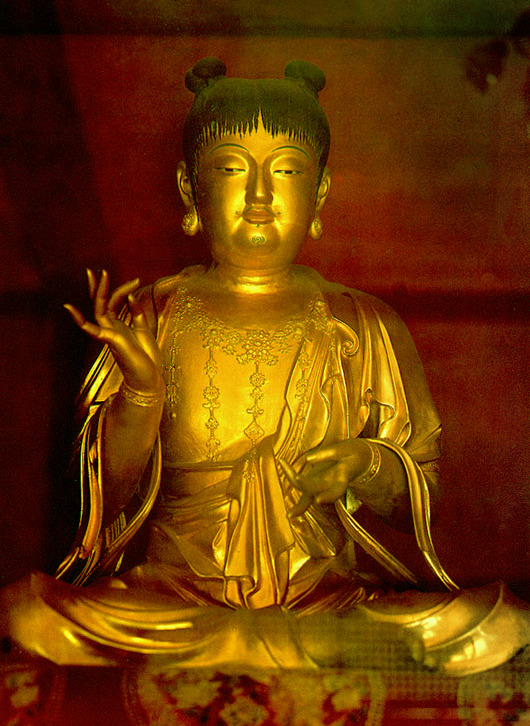
Bronze Maitreya Bodhisattva Bangasayusang
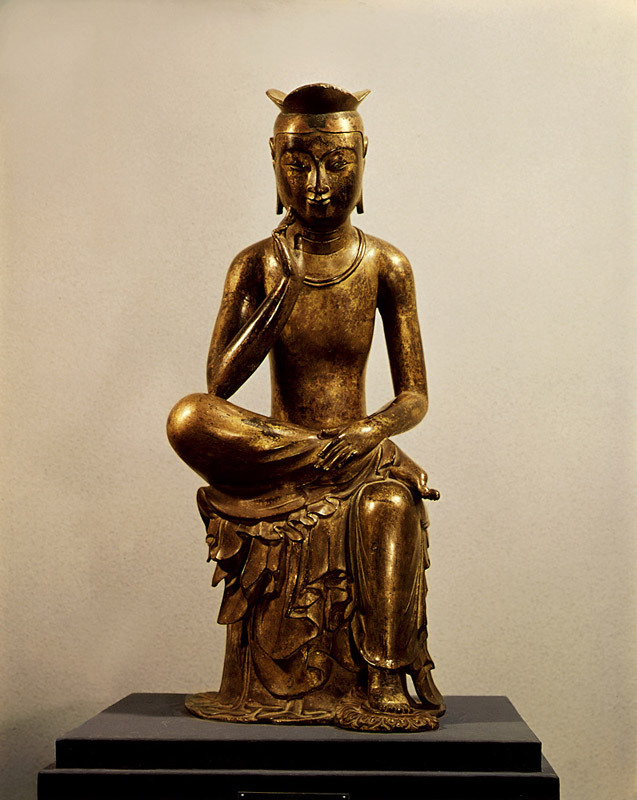
Korea's Gilt Bronze Maitreya Bodhisattva Bangasayusang
| Classification |
| National Treasures 83 |
| Name of Cultural Properties |
| Geumdongmireukbosalbangasang (Gilt-bronze maitreya in meditation) |
| Address |
| Buyeo National Museum. San16-1, Dongnam-ri, Buyeo-eup, Buyeo-gun, Chungcheongnam-do. S.KOREA |
| Age |
| Three Kingdoms Period |
A Bodhisattva is the symbol of compassion who seeks enlightenment while also trying to save all sentient beings by spreading the Buddha’s teachings. The Maitreya Bodhisattva is also referred to as the Ilsaengpoch’ (一生補處; Eka-jati-prati-baddha) Bodhisattva, meaning that the Matireya Bodhisattva will be the next Buddha after the Shakyamuni Buddha.
According to the Mirukhasaengkyong sutra(彌勒下生經) and the Kwanmirukposal Sangsaengtosolch’onkyong sutra(觀彌勒菩薩 上生兜率天經), the Maitreya Bodhisattva was born in Varanasi in southern India to a Brahman family. He received the teachings from the Shakyamuni Buddha who predicted that he would become the next Buddha. The Maitreya Bodhisattva then ascended to Tusita Heaven where he now teaches the Dharma to the Gods residing there. Tusita Heaven refers to a heaven of full knowledge and satisfaction, where no greed or worldly desires exist. The Gods there have perfect knowledge(吾唯知足)and do not need materials or external objects to be satisfied.
According to tradition, the Matireya Bodhisattva will return to the Saba(secular) world 5 670 000 000 years after the death of the Shakyamuni Buddha. He will attain Buddhahood under the Naga-puspa(dragon-flower) tree in a lotus garden(華林園) and will save all sentient beings with 3 Dharma Talks. The Maitreya Bodhisattva is the epitomy of compassion in Mahayana Buddhism and was the one predicted to be the future Buddha by the Shakyamuni Buddha himself.
The Maitreya Bodhisattva represents a very important figure in Buddhism. It is believed that if one dilligently cultivates one’s virtues in this lifetime, one will be reborn into Tusita Heaven where he/she will meet the Maitreya Bodhisattva. Furthermore he/she will also be present at the Maitreya Bodhisattva’s first Dharma Talk after his enlightenment and attain enlightenment himself. Hence the tradition of worshipping the Maitreya, Amitab ha and Avalokitesvara Bodhisattvas remains strong among the Buddhist populace even today.

A wooden Maitreya Bodhisattv
Ksitigarbha
Ksitigarbha
Chijang Bodhisattva is the one who delays his becoming a buddha until enlightenment for the people who suffer in the world. Earth store Bodhisattva. Ksitigarbha
Sanskrit: Kṣitigarbha অবলোকিতেশ্বর
Chinese: TC: 地藏菩薩, 地藏王菩薩
SC: 地藏菩萨, 地藏王菩萨
Pinyin: Dìzàng Púsà, Dìzàng Wáng Púsà
Wade-Giles: Ti Tsang, Ti Tsang Wang Pu Sa
Japanese: 地蔵 Jizō, 地蔵菩薩 Jizō Bosatsu, 地蔵王菩薩 Jizōō Bosatsu
Tibetan: Sai Nyingpo
Korean: 지장, 지장보살, ji jang, ji jang bosal
Vietnamese: Địa Tạng Vương
Kṣitigarbha is a bodhisattva primarily revered in East Asian Buddhism, usually depicted as a Buddhist monk in the Orient. The name may be translated as "Earth Treasury", "Earth Store", "Earth Matrix", or "Earth Womb." Kṣitigarbha is known for his vow not to achieve Buddhahood until all hells are emptied; therefore, he is regarded as the bodhisattva of hell beings. Usually depicted as a monk with a nimbus around his shaved head, he carries a staff to force open the gates of hell and a wish-fulfilling jewel to light up the darkness.
Back