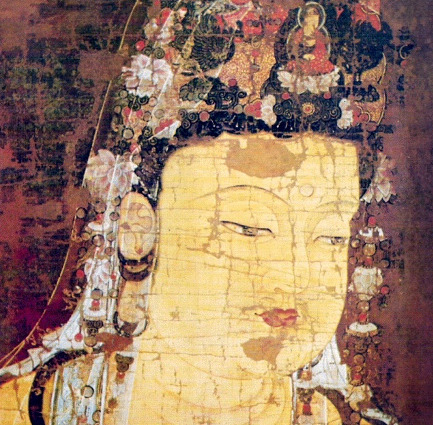
The Reflection of Infinite Compassion: Water-Moon Avalokitesvara
Introduction: The Epitome of Buddhist Aesthetics Among the myriad forms of Buddhist art, few images evoke such profound serenity and mystical beauty as the Water-Moon Avalokitesvara (Korean: Suwol Gwaneumdo). This masterpiece is not merely a painting; it is a spiritual vision captured in silk, gold, and pigment. It depicts Avalokitesvara, the Bodhisattva of Great Compassion, seated in a posture of royal ease on Mount Potalaka, gazing upon the reflection of the moon in the water.
Historically, the paintings of Water-Moon Avalokitesvara created during Korea’s Goryeo Dynasty (918–1392) are considered unrivaled in the world for their exquisite detail, delicate transparency, and spiritual depth. On this page, we invite you to explore the rich symbolism and the quiet majesty of this sacred image, which has served as a beacon of solace for countless souls over the centuries.
The Scene: A Meeting on Mount Potalaka The composition of the painting is rooted in the Avatamsaka Sutra (Flower Garland Sutra), specifically the chapter on the pilgrimage of the boy Sudhana (Seonjae Dongja).
- The Setting: The Bodhisattva sits on a rocky outcrop of Mount Potalaka, the legendary abode of Avalokitesvara, believed to be located in the southern seas. The scene is typically set at night, illuminated by a numinous glow.
- The Posture: Avalokitesvara is depicted in the "Post of Royal Ease" (Lalitasana), with the right leg crossed over the left knee and the left foot resting gently on a lotus blossom. This posture symbolizes the Bodhisattva’s dual nature: resting in the bliss of Nirvana while simultaneously remaining ready to step into the world of Samsara to save suffering beings.
- The Pilgrim: In the lower corner, the small figure of the boy pilgrim Sudhana stands with hands clasped in prayer. He represents the earnest seeker of truth—representing us, the viewers—asking for the teachings of enlightenment.
Symbolism: Decoding the Mystical Elements Every element in the Suwol Gwaneumdo is imbued with deep doctrinal meaning. To understand the painting is to read a visual scripture.
- The Water and the Moon: The title "Water-Moon" (Suwol) is a metaphor for the nature of reality in Mahayana Buddhism. Just as the moon is reflected in the water, the truth (Dharma) is reflected in the phenomenal world. Furthermore, it symbolizes the illusory nature of existence; the reflection is visible but cannot be grasped, teaching us about "Emptiness" (Sunyata). Yet, just as a single moon reflects in a thousand rivers, the compassion of Avalokitesvara is omnipresent, reaching every being who calls upon their name.
- The Willow Branch and Kundika: Next to the Bodhisattva, a willow branch is dipped in a Kundika (ritual sprinkler) filled with pure water. The willow represents the power to heal illnesses and physical suffering, while the pure water symbolizes the cleansing of spiritual defilements. It is a promise of healing for both body and mind.
- The Blue Bird: Often, a small blue bird is depicted holding a rosary or flying near the Bodhisattva. In Korean folklore and legends, this bird is seen as a messenger of the Bodhisattva, guiding practitioners to the sacred presence of Avalokitesvara.
- The Bamboo Grove: Behind the Bodhisattva, a pair of bamboo stalks rises. Bamboo, which is hollow inside yet strong and upright, symbolizes the virtue of an empty mind—free from greed and ego—and unbending integrity.
The Artistic Mastery of Goryeo While the iconography exists elsewhere in East Asia, the Korean Suwol Gwaneumdo of the Goryeo period stands apart due to its unique artistic techniques.
- The Veil of Transparency: The most striking feature is the sheer, transparent white veil that drapes over the Bodhisattva’s body. Goryeo artists achieved this effect by painting delicate white patterns (often medallions or phoenixes) over the underlying colors with microscopic precision. The veil looks so realistic that it seems to flutter in a gentle sea breeze, creating an atmosphere of ethereal mystery.
- Use of Gold and Color: The robes are often decorated with elaborate patterns using gold pigment. The technique of Ung-chae (applying color from the back of the silk) was used to create subtle, glowing hues that seem to emanate from within the figure rather than sitting on the surface. This creates a sense of divine luminosity that does not fade with time.
Spiritual Message: A Quiet Solace In a world filled with noise and chaos, the Water-Moon Avalokitesvara offers a moment of absolute stillness. The Bodhisattva does not look at the viewer directly but gazes down at the water or at the boy Sudhana. This is the gaze of deep listening—listening to the sounds of the world’s suffering (Gwan-eum literally means "Perceiver of Sounds").
The painting tells us that we do not need to go far to find the truth. Like the moon reflected in the water, enlightenment is right here, in the midst of our fluid, changing lives. It invites us to sit with our own reflections, to wash away our anxieties with the pure water of wisdom, and to find the stillness within.
Conclusion We hope this visual journey into the world of Suwol Gwaneumdo brings you a sense of peace. As you admire the flowing lines and the benevolent expression of the Bodhisattva, may you be reminded of the boundless compassion that supports you, silent and reflective as the moon upon the water.
Goryeo Buddhist painting of Suwol-Gwaneum-Do
or literally Painting of Water Moon Avalokitevara Bodhisattva Material : Ink and colors on silk
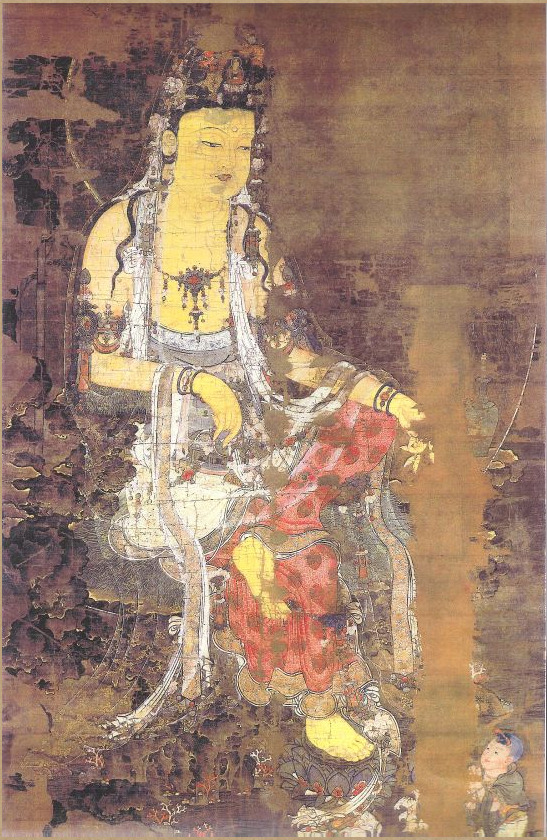
Avalokitesvara with Water and Moon 鏡神社 419.5 x 254.2cm
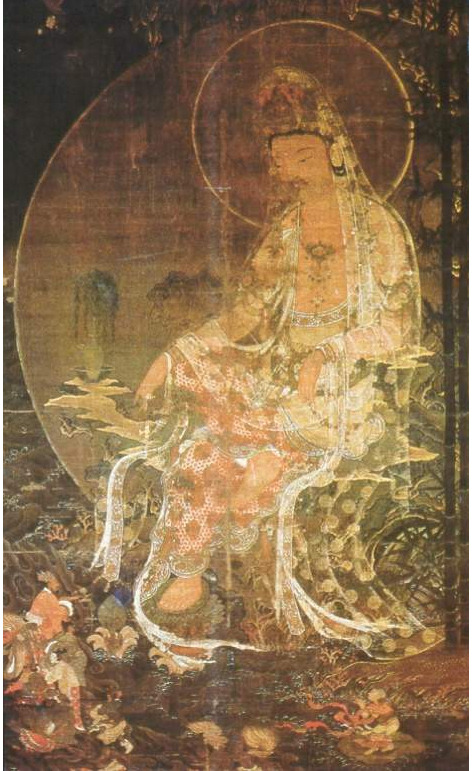
Avalokitesvara with Water and Moon 大德寺 227.9×125.8㎝
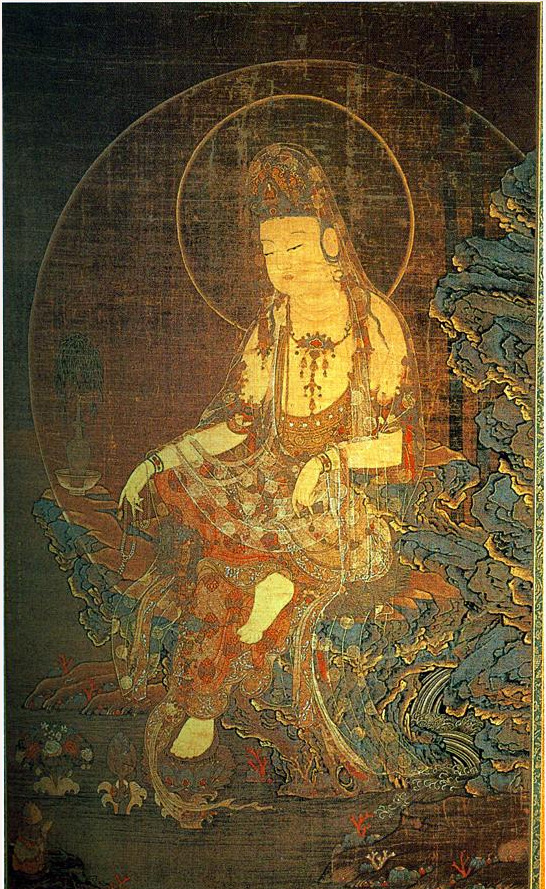
Avalokitesvara with Water and Moon 53x86㎝ (Treasure #926)
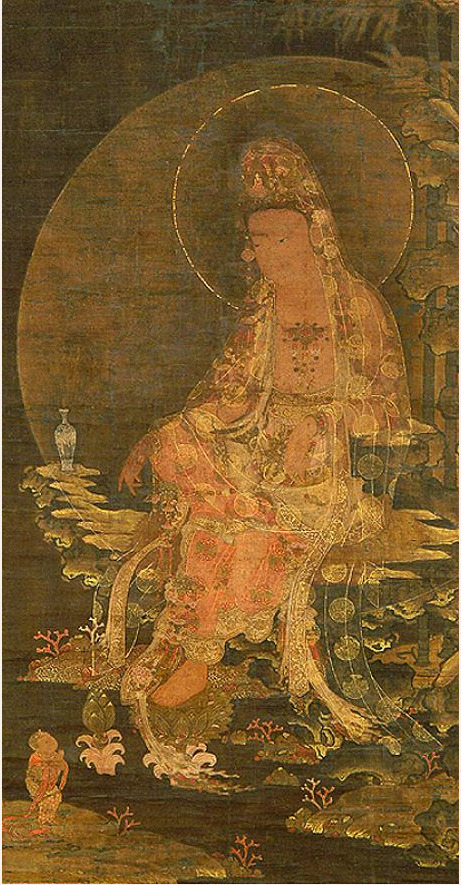
Avalokitesvara with Water and Moon (Treasure #1426)
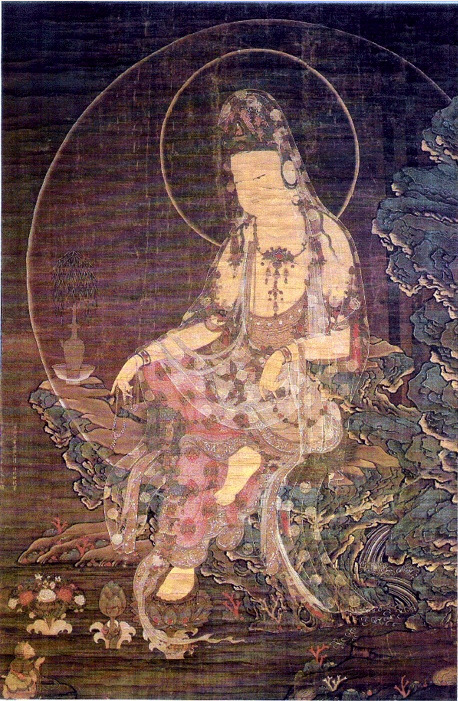
Avalokitesvara with Water and Moon
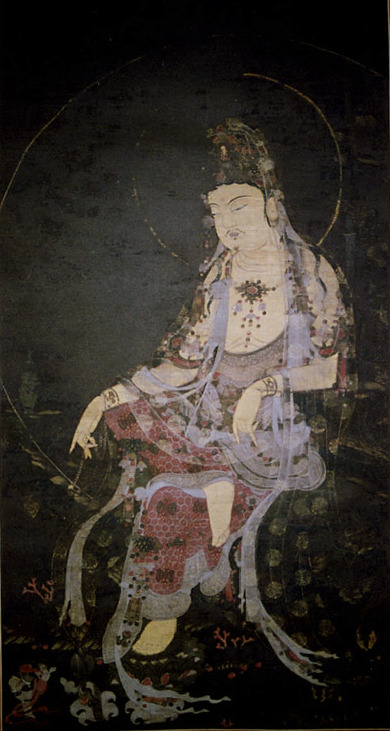
Avalokitesvara with Water and Moon (Treasure #1286)
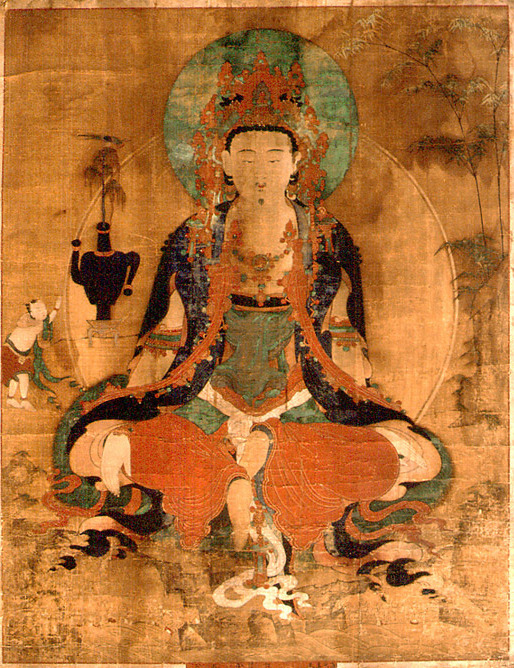
Avalokitesvara with Water and Moon (Treasure #1204)
The paintings named Avalokitesvara with Water and Moon were very popular during the Goryeo Dynasty and the Joseon Dynasty. Though this painting was deeply influenced by the conventions of Goryeo paintings, it has considerable modifications from Joseon techniques and styles.
The Bodhisattva Avalokitesvara who is well composed in the center of the painting sits on the auspicious grass above a rocky throne in the waves. He is endowed with one large halo behind his body and one small green halo around his head. He is wearing a splendid crown decorated with lotuses and beautiful jewels. Below is the boy Sudhana paying his respects to Avalokitesvara.
Differing from the Goryeo paintings, the significant characteristics of this painting are the frontal pose, the elongated figure, the small facial features, and the stylized and abstract lines used to depict the robes and the waves.

Avalokitesvara with Water and Moon 鏡神社 419.5 x 254.2cm
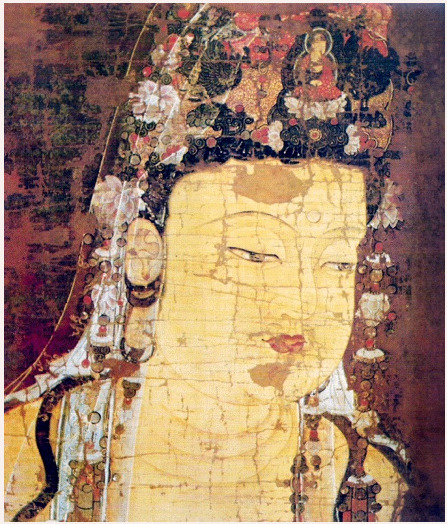
Avalokitesvara with Water and Moon

Suwol Gwaneum Do
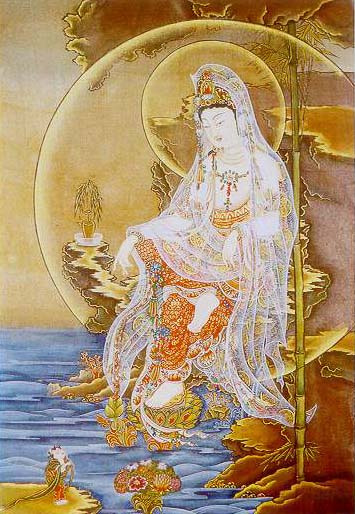
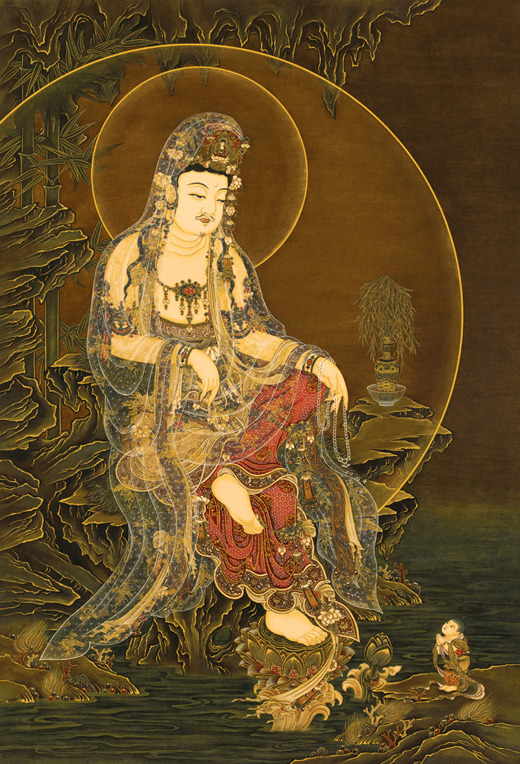
Avalokitesvara with Water and Moon
Back