Avalokitesvara
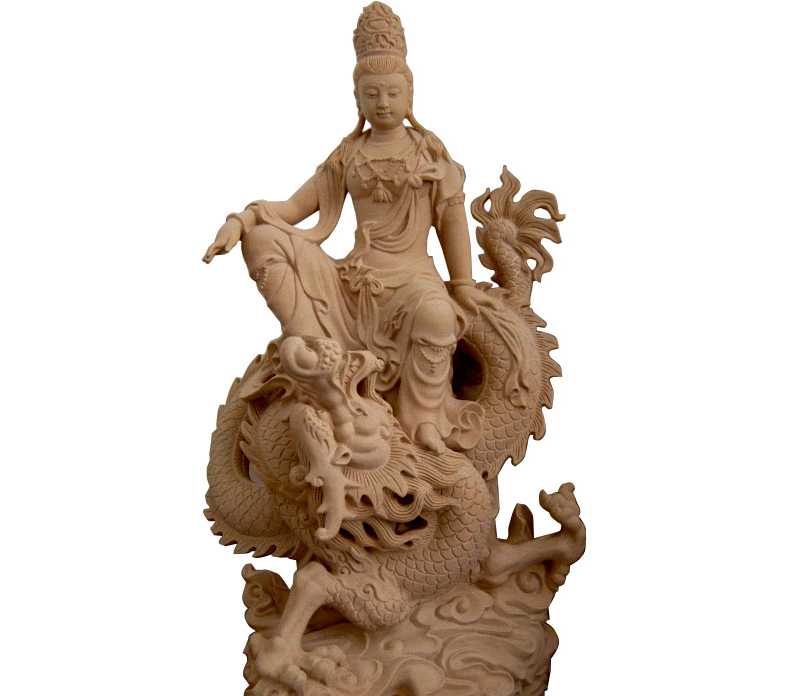
The Perceiver of the World’s Sounds: A Comprehensive Study of Avalokitesvara
I. Introduction: The Embodiment of Compassion
In the vast pantheon of Mahayana Buddhism, no figure commands the universal devotion, the artistic variation, or the profound theological weight of Avalokitesvara (Sanskrit). Known across Asia by many names—Gwan-se-eum or Gwaneum in Korea, Guanyin in China, Kannon in Japan, and Chenrezig in Tibet—this Bodhisattva is the quintessential embodiment of Great Compassion (Mahakaruna).
While the Buddha represents the Enlightened Mind and the nature of reality, Avalokitesvara represents the active agency of that enlightenment in the world of suffering. The name itself is a vow: to look down upon the cries of the world and to respond.
This document explores the etymology, the historical transformation from male to female, the complex iconography, the scriptural foundations, and the deep practice associated with the "Lord Who Gazes Down."
II. Etymology: The One Who Hears
To understand the function of this Bodhisattva, one must analyze the name, which has two primary translations, reflecting a shift in how the deity was understood as Buddhism traveled from India to East Asia.
1. The Sanskrit: Avalokitesvara
- Avalokita: "Looking down," "Gazing," or "Observing."
- Isvara: "Lord," "Master," or "Sovereign."
- Meaning: "The Lord who looks down (at the world)." This emphasizes the Bodhisattva's sovereignty and their position of observing the world of Samsara from the vantage point of Nirvana, yet choosing to remain engaged.
2. The East Asian: Gwan-se-eum (Korea) / Guanyin (China)
When the texts were translated into Chinese (and subsequently Korean), the translators focused on a slightly different variance of the name (Avalokitasvara).
- Gwan (觀): To perceive, to observe, to contemplate (Insight).
- Se (世): The world, the generations of man.
- Eum (音): Sound, voice, cry.
- Meaning: "The One Who Perceives the Sounds of the World."
This is a profound theological distinction. Avalokitesvara does not just see suffering visually; they listen to it. The "sound" refers specifically to the cries of suffering beings—prayers, weeping, and calls for help. This establishes an intimate, acoustic connection between the devotee and the savior.
III. The Great Transformation: From Prince to Goddess
One of the most fascinating aspects of Avalokitesvara is the gender fluidity exhibited across history. This transformation is not merely a cultural accident but a demonstration of the Mahayana concept of Upaya (Skillful Means)—the ability to take any form necessary to help beings.
1. The Indian Origin: The Royal Prince
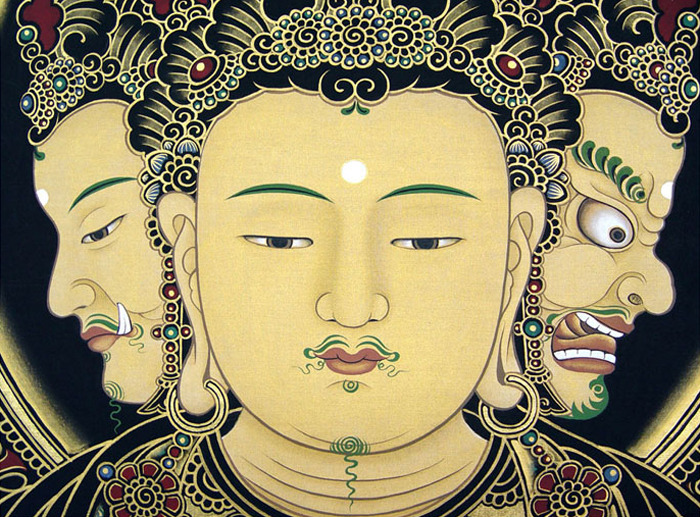
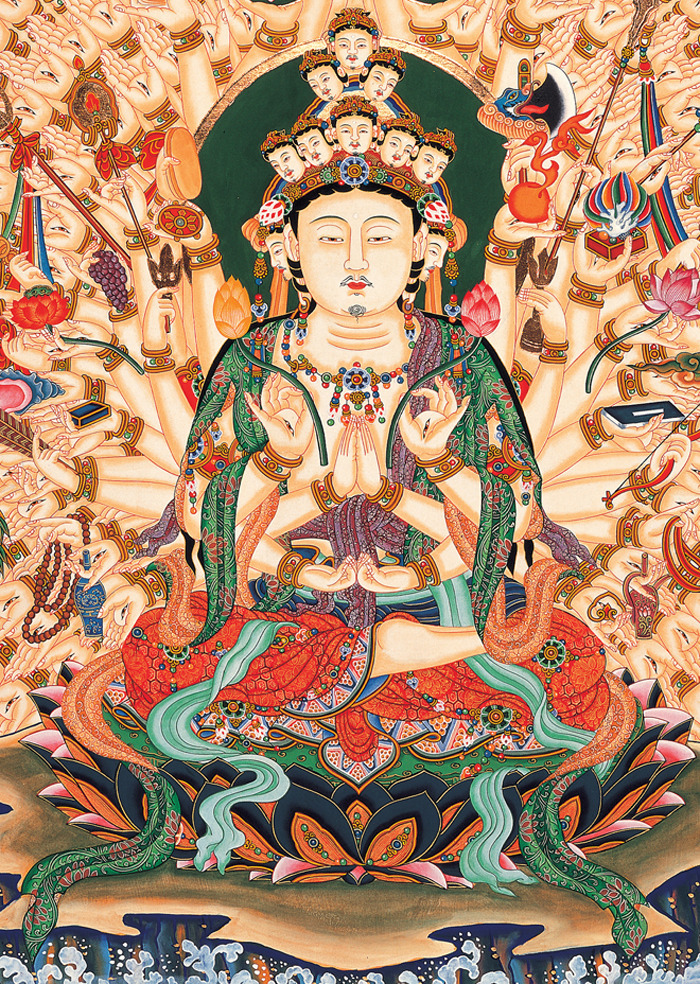
In early Indian art (1st–5th century CE) and in Tibet, Avalokitesvara is depicted clearly as male. He is often shown as a handsome prince, modeled after Indian royalty, sometimes with a slight mustache, representing the active, masculine energy of compassion. In the Pure Land trinity, he stands to the right of Amitabha Buddha as a male attendant.
2. The East Asian Metamorphosis
As Buddhism entered China (Tang and Song Dynasties), the depiction began to shift. By the 12th century, Avalokitesvara (Guanyin) was predominantly depicted with female features.
- Cultural Resonances: In East Asian culture, compassion, mercy, and the nurturing of life were strongly associated with the feminine/maternal ideal.
- Daoist Syncretism: The figure blended with indigenous female deities, such as the Queen Mother of the West and local fertility goddesses.
- The Legend of Princess Miao Shan: A popular Chinese folktale tells of a princess who was executed by her cruel father but refused to bear him ill will, eventually sacrificing her eyes and arms to cure his illness. She was revealed to be an incarnation of Guanyin.
3. The Theological Resolution: Transcending Gender
Buddhism teaches that enlightened beings are not bound by biological sex. The Lotus Sutra explicitly states that Avalokitesvara can manifest as a man, a woman, a child, a king, or a beggar—whatever the situation requires.
- In Korea: Gwaneum is often depicted with a soft, feminine face and graceful, flowing robes, but may still possess a very faint, painted mustache, symbolizing that the Bodhisattva transcends the duality of male and female.
IV. Iconography: The Many Faces of Mercy
Avalokitesvara is the subject of the most diverse iconography in Buddhist art. Each form represents a specific aspect of their power.
1. The Water-Moon Gwaneum (Su-wol Gwaneum)
A favorite in Goryeo Dynasty paintings (Korea).
- Image: The Bodhisattva sits on a rocky outcrop overlooking the sea, gazing at the reflection of the moon in the water.
- Symbolism: The moon represents the Truth (Dharma). The water represents the mind of sentient beings. Just as the moon reflects in every puddle of water, the Bodhisattva’s compassion reflects in every heart. It also symbolizes the illusory nature of phenomena (like a reflection in water).
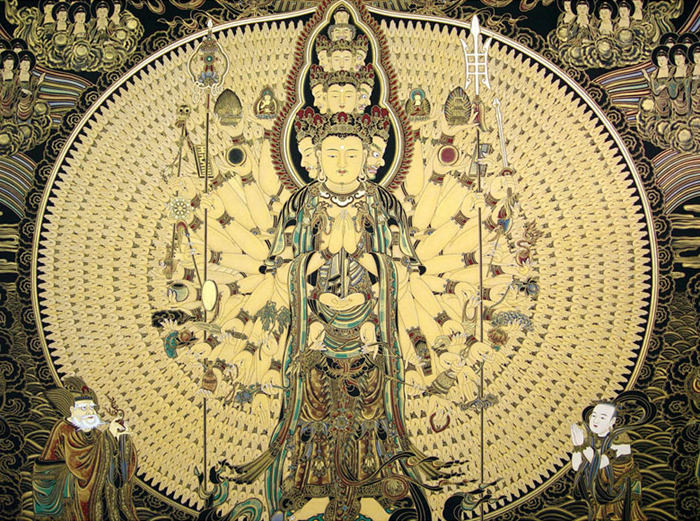
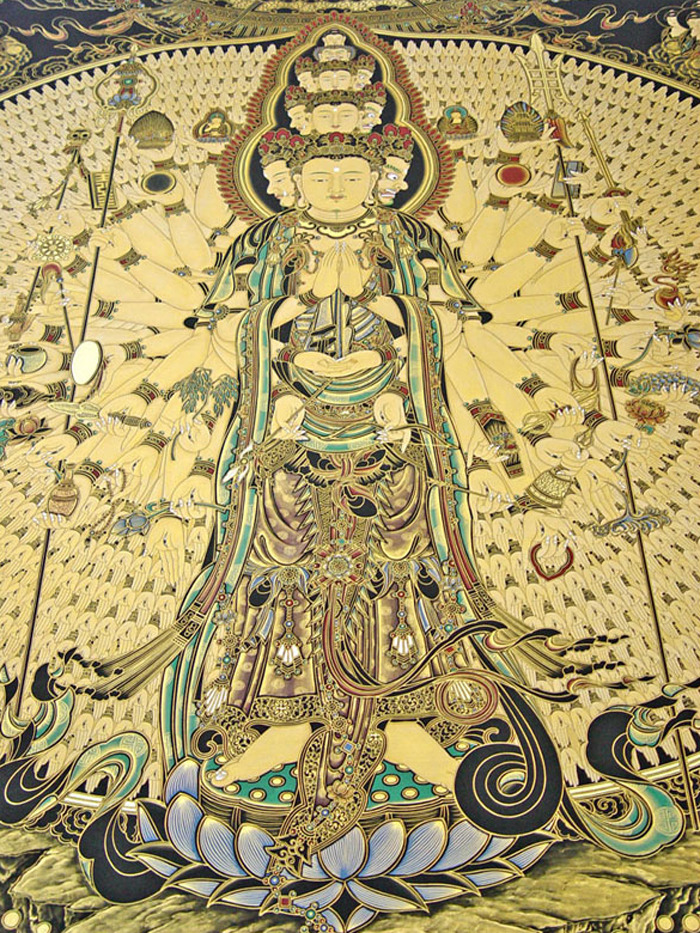
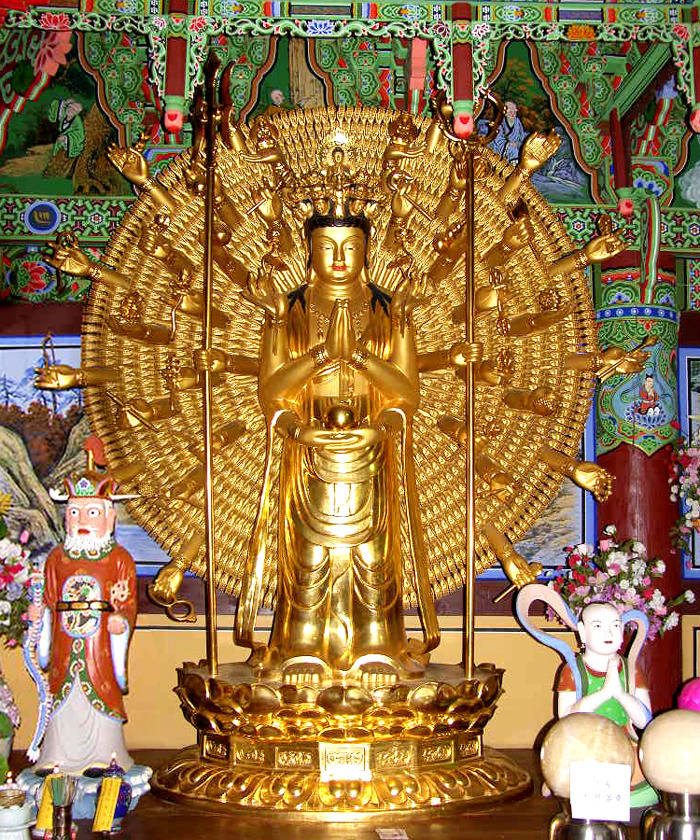
2. The Thousand-Armed, Thousand-Eyed Gwaneum
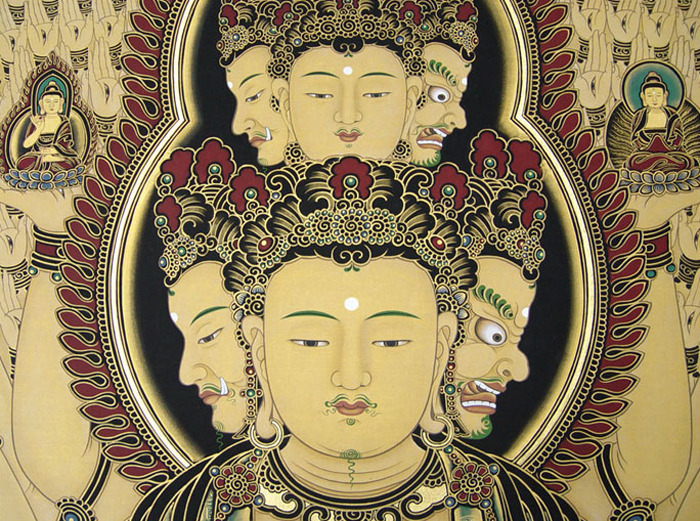
- The Myth: Legend says Avalokitesvara vowed not to rest until all beings were saved. The task was so overwhelming that his head split into eleven pieces and his arms shattered. Amitabha Buddha (his spiritual father) healed him, giving him eleven heads to hear all cries and a thousand arms to reach out to everyone.
- Symbolism:
- 1000 Hands: Infinite capacity to act/help.
- Eye in each palm: Wisdom combined with action. He does not act blindly; every helping hand is guided by the eye of wisdom.
- Implements: The hands hold various tools (lasso, sword, sutra, medicine, shield), representing different methods to save different types of people.
3. The Eleven-Headed Gwaneum (Ekadasamukha)
- Structure: Ten small heads are arranged atop the main head.
- The Wrathful Face: While most faces are smiling, the one on the very top or back is often wrathful or angry. This symbolizes "Tough Love"—compassion that sometimes must be forceful to stop a being from doing evil (like a parent shouting at a child running into traffic).
4. Common Attributes
- The Willow Branch: Used to sprinkle the nectar of life; represents healing and flexibility (bending without breaking).
- The Vase (Kalasha): Contains the "Amrita" (Nectar of Immortality/Wisdom) that washes away defilements.
- The Amitabha Crown: Avalokitesvara almost always wears a small image of Amitabha Buddha in their crown/headdress, showing their lineage and loyalty to the Buddha of Infinite Light.
V. Scriptural Foundation
Avalokitesvara is the protagonist of two of the most important texts in Mahayana Buddhism.
1. The Lotus Sutra: Chapter 25 (The Universal Gate)
This chapter is often published as a standalone book called the Gwaneum Sutra.
- The Promise: The Buddha states that if any suffering being calls out the name "Avalokitesvara," the Bodhisattva will instantly perceive the sound and deliver them.
- The Perils: The text lists specific dangers: fire, drowning, ghosts, sword attacks, imprisonment, and storms. In each case, mindfulness of Avalokitesvara neutralizes the threat.
- Psychological Reading: "Fire" is often interpreted as the fire of anger; "drowning" as the ocean of desire.
2. The Heart Sutra (Prajnaparamita Hridaya)
In this short but essential text, Avalokitesvara is the speaker, addressing Sariputra (the wisest Arhat).
- The Message: Here, Avalokitesvara acts not just as a figure of mercy, but as a master of Deep Wisdom.
- Key Line: "Form is emptiness, emptiness is form."
- Significance: This proves that Avalokitesvara is not merely a "saint" of emotional comfort, but a being who has penetrated the deepest nature of reality. Their compassion arises because they see the emptiness of self; since there is no "me" and no "you," your suffering is truly my suffering.
VI. The Pure Land Connection
Avalokitesvara is intimately tied to Amitabha Buddha and the Western Pure Land (Sukhavati).
- The Savior of the Dead: In East Asian funeral rituals, Avalokitesvara is often invoked as the guide for the soul.
- The Ship of Salvation: Gwaneum is often depicted as the captain of the "Dragon Ship of Wisdom" that ferries the souls of the deceased across the sea of suffering to the Pure Land.
- The Trinity: In temple halls, you will see the Amitabha Triad: Amitabha (Center), Avalokitesvara (Left, representing Compassion), and Mahasthamaprapta (Right, representing Wisdom/Power).
VII. Mantras and Practice
Devotion to Avalokitesvara is one of the most practical and widespread forms of Buddhist practice.
1. The Six-Syllable Mantra: Om Mani Padme Hum
Associated primarily with the Tibetan form (Chenrezig), but known worldwide.
- Om: Generosity (purifies Pride).
- Ma: Ethics (purifies Jealousy).
- Ni: Patience (purifies Passion/Desire).
- Pad: Diligence (purifies Ignorance/Prejudice).
- Me: Renunciation (purifies Greed).
- Hum: Wisdom (purifies Aggression/Hatred).
- Literal Meaning: "The Jewel in the Lotus." (The jewel of altruism arises in the lotus of consciousness).
2. The Great Compassion Dharani (Shin-Myo-Jang-Gu-Dae-Da-Ra-Ni)
In Korean temples, this long chant (Dharani) is recited every morning. It is believed to have immense protective power and to cleanse the karma of past lifetimes.
3. Calling the Name (Yeombul)
Simply chanting "Namu Gwan-Se-Eum Bosal" (I take refuge in Avalokitesvara) is considered a complete practice. It calms the mind, focuses intention, and invokes the energy of compassion within the practitioner's own heart.
VIII. Places of Power: The 33 Sanctuaries
In East Asia, Gwaneum is often believed to reside in specific physical locations, particularly near the sea (linking back to the Potalaka Mountain described in sutras).
- Potalaka: The mythical abode of Avalokitesvara, usually described as an island mountain in the southern seas.
- Korea's Three Great Gwaneum Temples:
- Naksan-sa (East Coast): Where the monk Uisang had a vision of Gwaneum.
- Boriam (South Coast): A hermitage on a cliff.
- Bomun-sa (West Coast): A temple on an island.
- Praying at these sites is considered particularly auspicious for answering specific prayers.
- Putuo Shan (China): One of the four sacred mountains of Chinese Buddhism, an island dedicated entirely to Guanyin.
IX. Conclusion: Becoming Avalokitesvara
Ultimately, Avalokitesvara is more than a deity to be worshipped; they are a mirror of the potential within the human heart.
The teaching of the Bodhisattva is that compassion is not a passive emotion, but a formidable power—an active listening, a thousand hands reaching out, a refusal to abandon anyone.
In the modern world, where individuals often feel isolated and unheard, the archetype of Avalokitesvara serves as a profound psychological and spiritual resource. The practice invites the devotee to stop looking away from suffering (their own and others') and to develop the "listening ear." By listening to the cries of the world with an open heart, the practitioner becomes the hands and eyes of Avalokitesvara, continuing the Bodhisattva's work in the here and now.
As the Gwaneum Sutra concludes:
"Think of the power of that Perceiver of Sounds... For birth, old age, sickness, and death, He is the unfailing refuge."
Sahasrabhuja

Thirty-three forms of Avalokitesvara

1. Willow-branch 楊柳觀音 양류관음

2. Dragon -head 龍頭觀音 용두관음

3. Sutra-holding 持經觀音 지경관음

4. Circle of Light 圓光觀音 원광관음

5. Royal Ease 遊戲觀音 유희관음

6. White-robe 능정관음(能靜觀音)

7. White-robe 白衣觀音 백의관음

8. Lotus-reclining 蓮臥觀音 연와관음

9. Life-lengthening 延命觀音 연명관음

10. Waterfall-gazing 瀧見觀音 롱견관음

11. Medicine-giving 施藥觀音 시약관음

12. Fish-basket 魚籃觀音 어람관음

13. Virtuous-King Brahma 德王觀音 덕왕관음

14. Water-moon 水月觀音 수월관음

15. Tara 군다리관음(軍茶利觀音)

16. Nilakantha, Blue-necked 青頸觀音 청경관음

17. Awe-inspiring heavenly general 威德觀音 위덕관음

18. Full Moon 만월관음(滿月觀音)

19. Cave-dwelling 岩戶觀音 암호관음

20.Lotus-holding 持蓮觀音 지련관음

21. Calm and Serene 能靜觀音 능정관음

22. Anavatapta 阿耨觀音 아뇩관음

23. Abhetti 阿摩提觀音 아마제관음(阿摩提觀音) 아마례관음(阿摩禮觀音), 아마협관음(阿摩鋏觀音)

24. Parnasvari 葉衣觀音 엽의관음

25. Vaidurya 琉璃觀音 유리관음, 향왕관음(香王觀音)

26. Tara 多羅尊觀音 다f라존관음

27. Cintamanicakr, Many Jewels 眾寶觀音 여의륜관음(如意輪觀音)

28. Six Periods 六時觀音 육시관음

29. Universal Compassion 普悲觀音 보비관음
30.Wife of Ma Lang 馬郎婦觀音 마랑부관음
31. Sahasrabhuja 천수관음(千手觀音)

32. Non-dual 不二觀音 불이관음(不二觀音)

33.Water-sprinkling 灑水觀音 쇄수관음
